Real Estate Blog

July 16, 2020

Mortgage Rates Hit Record Lows for Three Consecutive Weeks


Mortgage Rates Hit Record Lows for Three Consecutive Weeks

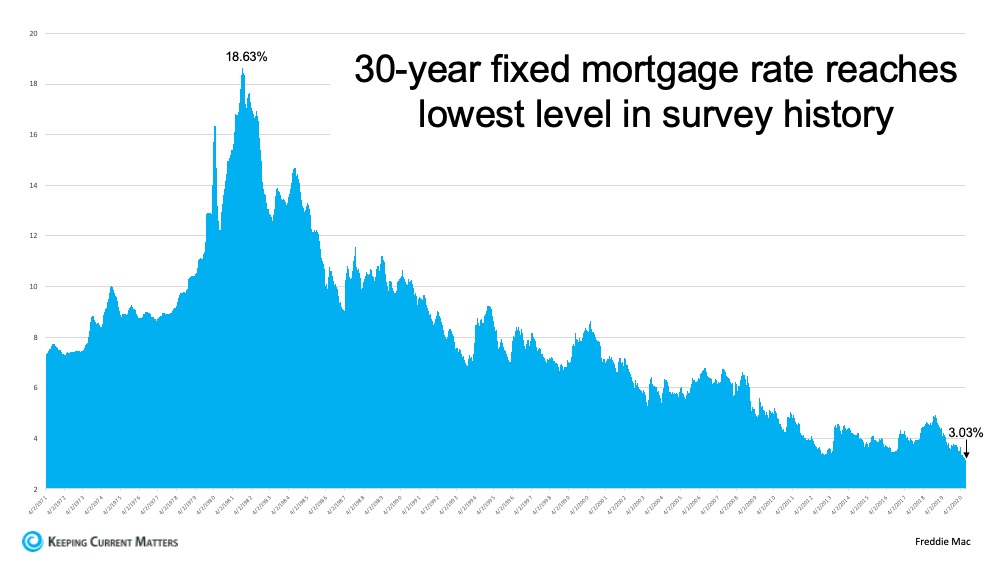
Over the past several weeks, Freddie Mac has reported the average 30-year fixed mortgage rate dropping to record lows, all the way down to 3.03%. Last week’s reported rate reached the lowest point in the history of the survey, which dates back to 1971 (See graph below):Mortgage Rates Hit Record Lows for Three Consecutive Weeks | Keeping Current Matters
What does this mean for buyers?

This is huge for homebuyers. Those currently taking advantage of the increasing affordability that comes with historically low interest rates are winning big. According to Sam Khater, Chief Economist at Freddie Mac:

“The summer is heating up as record low mortgage rates continue to spur homebuyer demand.”

In addition, move.com notes:

“Summer home buying season is off to a roaring start. As buyers flooded into the market, realtor.com® monthly traffic hit an all-time high of 86 million unique users in June 2020, breaking May’s record of 85 million unique users. Realtor.com® daily traffic also hit its highest level ever of 7 million unique users on June 25, signaling that despite the global pandemic buyers are ready to make a purchase.”

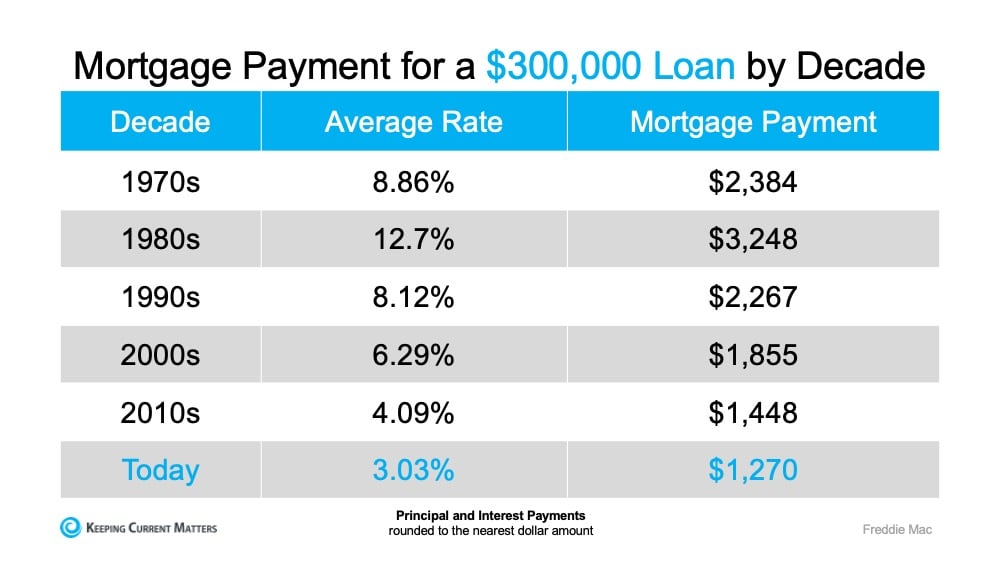
Clearly, buyers are capitalizing on today’s low rates. As shown in the chart below, the average monthly mortgage payment decreases significantly when rates are as low as they are today.Mortgage Rates Hit Record Lows for Three Consecutive Weeks | Keeping Current MattersA lower monthly payment means savings that can add up significantly over the life of a home loan. It also means that qualified buyers may be able to purchase more home for their money. Maybe that’s a bigger home than what they’d be able to afford at a higher rate, an increasingly desirable option considering the amount of time families are now spending at home given today’s health crisis.
Bottom Line

If you’re in a position to buy a home this year, it’s a great time to reach out to a local real estate professional to initiate the process while mortgage rates are historically low.


 

Posted in Home Ownership
July 7, 2020

Market Stats June 2020

Southern Oregon Market Stats

April 1, 2020 to June 30, 2020

By Jake Rockwell

Now that we've seen the true effects of COVID-19 and are finally starting to see things reopen, we can accurately dive into the numbers of this last few months in regards to the real estate market specifically here in Southern Oregon. In the last 60 days Jackson County alone has seen a sales volume of $303.5 Million with the Median Existing Homes sales price jumping to $306,000. Which shows us that home prices have yet to decrease as many people had expected. In fact, with some people choosing to wait to list their homes this lead to less homes on the market and more competition. This allowed many seller to hold their prices or even go up just slightly given the market share. 

Key Takeaways:

  • Northwest Medford is up 27.6% from this time last year and up 76.6% over the last 5 years
  • Northeast Grants Pass experienced an 8.6% increase and a 50.1% over the past 5 years while the days on market average have decreased from 41 to 33 in the last year
  • Overall the largest change that is easily noticed is Days on Market continuing to decrease 

Links to Stats:


Create a custom market report catered to your neighborhood or any specific area and criteria.

Want an instant market valuation for you property?

June 30, 2020

What Are the Experts Saying About Future Home Prices?


What Are the Experts Saying About Future Home Prices?

A worldwide pandemic and an economic recession have had a tremendous effect on the nation. The uncertainty brought about by both has made predicting consumer behavior nearly impossible. For that reason, forecasting home prices has become extremely difficult.

Normally, there’s a simple formula to determine the future price of any item: calculate the supply of that item in ratio to the demand for that item. In housing right now, demand far exceeds supply. Mortgage applications to buy a home just rose to the highest level in 11 years while inventory of homes for sale is at (or near) an all-time low. That would usually indicate strong appreciation for home values as we move throughout the year.

Some experts, however, are not convinced the current rush of purchasers is sustainable. Ralph McLaughlin, Chief Economist at Haus, explained in their June 2020 Hausing Market Forecast why there is concern:

“The upswing that we’ll see this summer is a result of pent-up demand from homebuyers and supply-in-progress from homebuilders that has simply been pushed off a few months. However, after this pent-up demand goes away, the true economic scarring due to the pandemic will begin to affect the housing market as the tide of pent-up demand goes out.”

The virus and other challenges currently impacting the industry have created a wide range of thoughts regarding the future of home prices. Here’s a list of analysts and their projections, from the lowest depreciation to the highest appreciation:

We can garner two important points from this list:

  1. There is no real consensus among the experts.
  2. No one projects prices to crash like they did in 2008.

Bottom Line

Whether you’re thinking of buying a home or selling your house, know that home prices will not change dramatically this year, even with all of the uncertainty we’ve faced in 2020.

Posted in Home Ownership
June 17, 2020

Is the Economic Recovery Already Underway?

Is the Economic Recovery Already Underway?

The Wall Street Journal just released their latest monthly Survey of Economists. In an article on the findings, they reported:

“The U.S. economy will be in recovery by the third quarter of this year, economists said in a survey that also concluded the labor market will fare better than previously expected following the effects of the coronavirus pandemic.”

Clearly, the latest jobs report from the U.S. Bureau of Labor Statistics confirmed the labor market is outperforming expectations, as it revealed that 2.5 million jobs were added. Directly before the release, experts forecasted that we would lose over 8 million jobs.

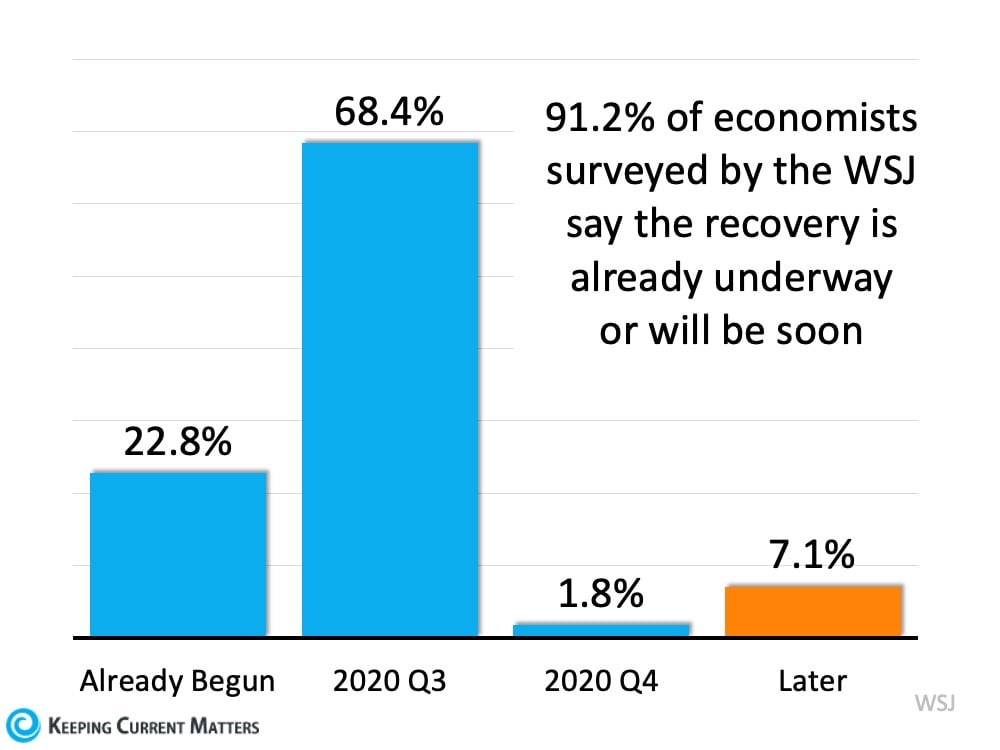
A second revelation indicating the economy is already about to turn around was also somewhat unexpected. More than 9 out of 10 economists surveyed believe the recovery has already begun this quarter or will begin in the third quarter. Here are the results of the survey question asking when the recovery will begin:Is the Economic Recovery Already Underway? | Keeping Current Matters The survey also asked what type of recovery the economists expect.

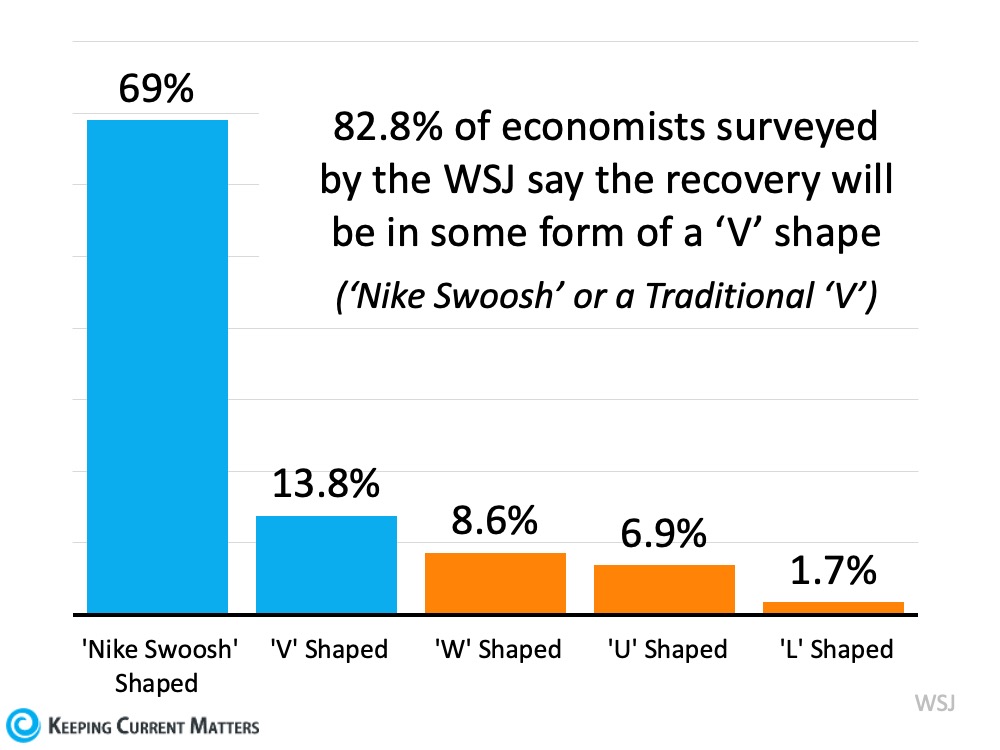
More than 8 out of 10 believe it will be a form of a ‘V’ recovery:

  • A true ‘V’ with a sharp drop and a sharp rebound
  • A ‘Nike Swoosh’ with a sharp drop and a more gradual recovery, coined after the company’s logo

Some experts, possibly concerned about a second wave of COVID-19, call for a ‘W’ recovery – a double dip recession.

Others call for a ‘U’ with a prolonged bottom.

A very small percentage project the dreaded ‘L’ recovery, which is no recovery at all for the foreseeable future (think of the Great Recession).

Here’s the breakdown:Is the Economic Recovery Already Underway? | Keeping Current Matters Bottom Line

Though we still have a long and difficult journey ahead, it appears the worst for both the economy and the unemployment situation may be in our rearview mirror.

Posted in News
June 8, 2020

Market Stats May 2020

Southern Oregon Market Stats

March 1, 2020 to May 31, 2020

By Jake Rockwell

Prices have  largely stayed the same, while many people we're hoping that the COVID-19 crisis would aid in home pricing falling a bit and impacting affordability, lots of demand lead to the home prices actually rising a bit especially when compared from this time last year. As we recover from COVID-19 and we enter into Phase 2 of re-opening we can expect the number of transactions will most likely increase in the next couple months as anyone that was hesitant to jump into the market is making up for any lost time. We have seen our website searches reflect the market shift from the impact of COVID-19 as people are looking to moving from larger cities to smaller places have dramatically increased.

Key Takeaways

  • Homes that are on the market are spending less time before going into contract, this is shown by the DOM or Days on Market, number dropping.
  • All of Jackson County pricing is up 6% from this time last year. 
  • All of Josephine County pricing is up 7% from this time last year. 
  • Specific neighborhoods have experienced a dramatic pricing increase such as NE Grant Pass up 20% from this time last year. 

Links to Stats:


Create a custom market report catered to your neighborhood or any specific area and criteria.

Want an instant market valuation for you property?

June 4, 2020

Is it Time to Sell Your Vacation Home?

Is it Time to Sell Your Vacation Home?

The travel industry is one of the major sectors that’s been hit extremely hard by the COVID-19 pandemic. Today, it’s hard to know how long it will take for summer travelers to be back in action and for the industry to fully recover. Homeowners who rent their secondary properties on their own or through programs like Airbnb, which has over 660,000 listings in the U.S. alone, have been impacted in this challenging time. Some of these homeowners are considering selling their vacation homes, and understandably so.

A recent CNN article indicated:

“With global travel screeching to a halt during the pandemic, a number of Airbnb hosts are planning to sell their properties…These desperate moves come as hosts face the possibility of losing thousands of dollars a month in canceled bookings while bills, maintenance costs, and mortgage payments pile up.”

If you’re one of the property owners in this position, you too may be feeling the pain of decreased travel, especially as we prepare for the typical busy summer vacation season. A recent survey notes that 48% of Americans have already canceled summer travel plans due to the current health crisis. In addition, 36% indicated they don’t have vacation plans, and only 16% said they did not cancel their summer travel.

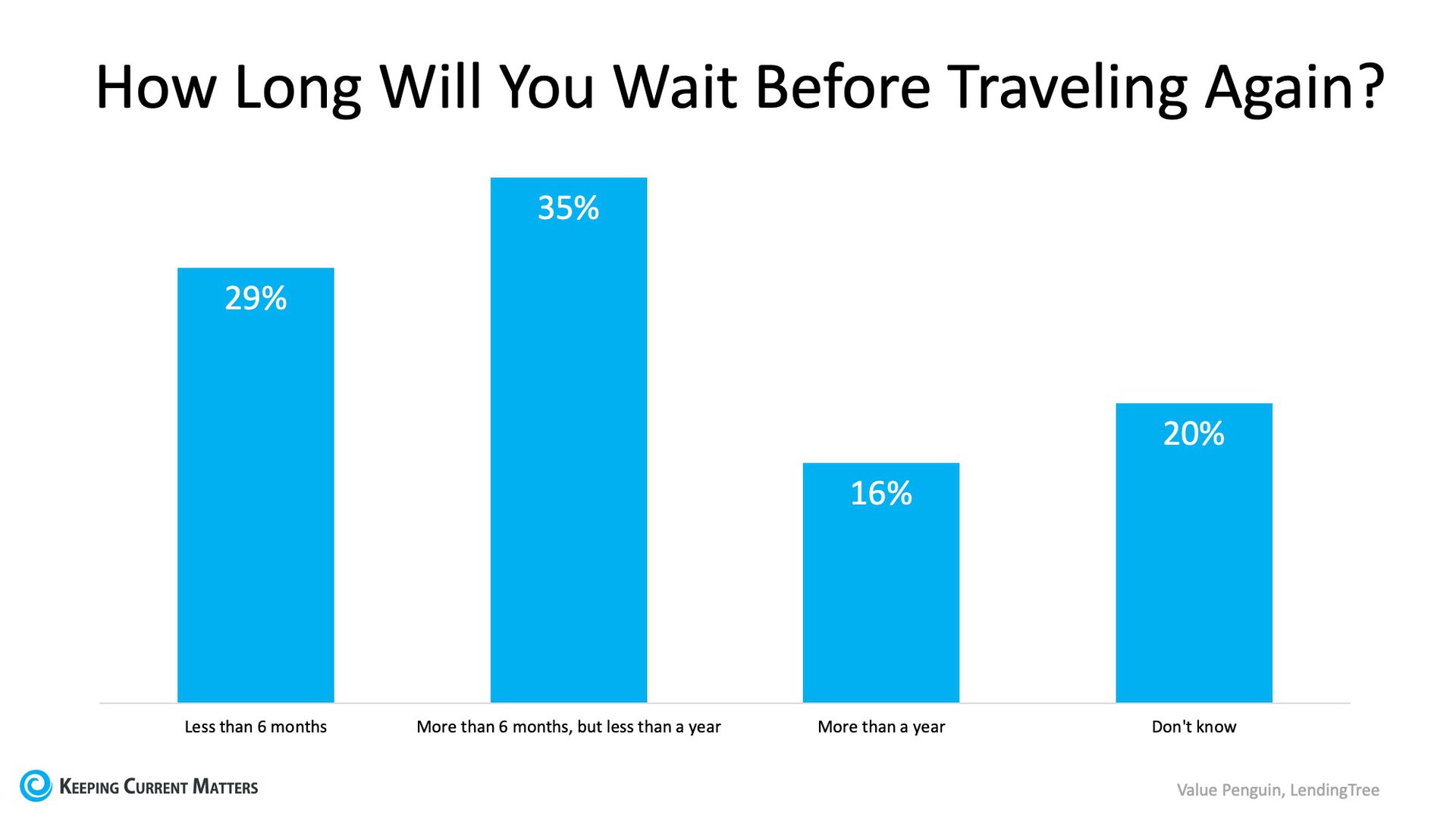
The same survey also asked, “How long will you wait before traveling again?” Not surprisingly, only 29% of respondents are planning to travel within the next 6 months. That means 71% are putting their plans on hold for at least 6 months, or are still unsure about future travel. That can continue to add to the significant income loss that many property renters felt this spring.Is it Time to Sell Your Vacation Home? | Keeping Current MattersIf you’re considering selling your rental property, know that there are two key factors indicating that selling your vacation home now may be your best move as a homeowner.

1. Inventory Shortage

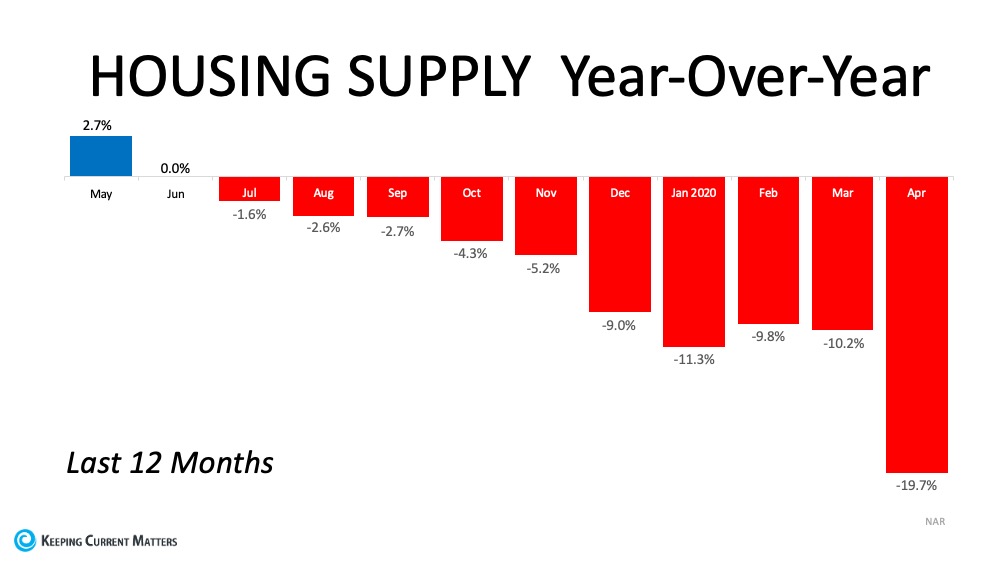
The inventory of overall homes for sale is well below the demand from potential buyers, so many eyes may be searching for a home like yours. According to the National Association of Realtors (NAR), total housing inventory, meaning homes available to purchase, is down 19.7% from one year ago (see graph below):Is it Time to Sell Your Vacation Home? | Keeping Current MattersInventory across the country continues to be a challenge, with only a 4.1-month supply of listings available at the current sales pace. For a balanced market, where there are enough homes available for interested buyers to purchase, that number would need to bump up to a 6-month supply. This means we don’t have enough inventory for the number of buyers looking for homes, so selling in this scenario is ideal. Buyers are looking now, and some vacation homes make a great primary residence or second home for those eager to escape from more populated urban areas.

2. Home Prices

The lack of inventory is also keeping homes from depreciating in value. Today, prices are holding strong and experts forecast home price appreciation to continue throughout this year. Selling your home while prices are holding steady is a sound business move. You’ll likely have equity you’ve earned working for you as well. If your home has been vacant for the past few months, the forced savings you have built in your equity may help balance out possible rental income loss due to the slowdown in the travel industry.

Bottom Line

We don’t know exactly when heightened summer travel will return or what it will look like when it does. If you’re considering selling your vacation home, contact a local real estate professional to determine your options in the current market.

Posted in Home Ownership
June 1, 2020

The Benefits of Homeownership May Reach Further Than You Think

The Benefits of Homeownership May Reach Further Than You Think

More than ever, our homes have become an integral part of our lives. Today they are much more than the houses we live in. They’re evolving into our workplaces, schools for our children, and safe havens that provide shelter, stability, and protection for our families through the evolving health crisis. Today, 65.3% of Americans are able to call their homes their own, a rate that has risen to its highest point in 8 years.

June is National Homeownership Month, and it’s a great time to reflect on the benefits of owning your own home. Below are some highlights and quotes recently shared by the National Association of Realtors (NAR). From non-financial to financial, and even including how owning a home benefits your local economy, these items may give you reason to think homeownership stretches well beyond a sound dollars and cents investment alone.

Non-Financial Benefits

Owning a home brings families a sense of happiness, satisfaction, and pride.

  • Pride of Ownership: It feels good to have a place that’s truly your own, especially since you can customize it to your liking. “The personal satisfaction and sense of accomplishment achieved through homeownership can enhance psychological health, happiness and well-being for homeowners and those around them.”
  • Property Maintenance and Improvement: Your home is your stake in the community, and a way to give back by driving value into your neighborhood.
  • Civic Participation: Homeownership creates stability, a sense of community, and increases civic engagement. It’s a way to add to the strength of your local area.

Financial Benefits

Buying a home is also an investment in your family’s financial future.

  • Net Worth: Homeownership builds your family’s net worth. “The median family net worth for all homeowners ($231,400) increased by nearly 15% since 2013, while net worth ($5,000) actually declined by approximately 9% since 2013 for renter families.”
  • Financial Security: Equity, appreciation, and predictable monthly housing expenses are huge financial benefits of homeownership. Homeownership is truly the best way to improve your long-term net worth.

Economic Benefits

Homeownership is even a local economic driver.

  • Housing-Related Spending: An economic force throughout our nation, housing-related expenses accounted for more than one-sixth of the country’s economic activity over the past three decades.
  • GDP Growth: Homeownership also helps drive GDP growth as the country aims to make an economic rebound. “Every 10% increase in total housing market wealth would translate to approximately $147 billion in additional consumer spending, or 0.8% of GDP, as well as billions of dollars in new federal tax revenue.”
  • Entrepreneurship: Homeownership is even a form of forced savings that provides entrepreneurial opportunities as well. “Owning a home enables new entrepreneurs to obtain access to credit to start or expand a business and generate new jobs by using their home as collateral for small business loans.”

Bottom Line

The benefits of homeownership are vast and go well beyond the surface level. Homeownership is truly a way to build financial freedom, find greater satisfaction and happiness, and make a substantial impact on your local economy. If owning a home is part of your dream, contact a local real estate professional to begin the homebuying process today.

Posted in Home Ownership
May 28, 2020

Experts Predict Economic Recovery Should Begin in the Second Half of the Year

Experts Predict Economic Recovery Should Begin in the Second Half of the Year

One of the biggest questions we all seem to be asking these days is: When are we going to start to see an economic recovery? As the country begins to slowly reopen, moving forward in strategic phases, business activity will help bring our nation back to life. Many economists indicate a recovery should begin to happen in the second half of this year. Here’s a look at what some of the experts have to say.

Jerome Powell, Federal Reserve Chairman

“I think there’s a good chance that there’ll be positive growth in the third quarter. And I think it’s a reasonable expectation that there’ll be growth in the second half of the year…

So, in the long run, I would say the U.S. economy will recover. We’ll get back to the place we were in February; we’ll get to an even better place than that. I’m highly confident of that. And it won’t take that long to get there.”

Nonpartisan Analysis for the U.S Congress

“The economy is expected to begin recovering during the second half of 2020 as concerns about the pandemic diminish and as state and local governments ease stay-at-home orders, bans on public gatherings, and other measures. The labor market is projected to materially improve after the third quarter; hiring will rebound and job losses will drop significantly as the degree of social distancing diminishes.”

Neel Kashkari, President, Minneapolis Federal Reserve Bank

“I think we need to prepare for a more gradual recovery while we hope for that quicker rebound.”

We’re certainly not out of the woods yet, but clearly many experts anticipate we’ll see a recovery starting this year. It may be a bumpy ride for the next few months, but most agree that a turnaround will begin sooner rather than later.

During the planned shutdown, as the economic slowdown pressed pause on the nation, many potential buyers and sellers put their real estate plans on hold. That time coincided with the traditionally busy spring real estate season. As we look ahead at this economic recovery and we begin to emerge back into our communities over the coming weeks and months, perhaps it’s time to think about putting your real estate plans back into play.

Bottom Line

The experts note a turnaround is on the horizon, starting as early as later this year. If you paused your 2020 real estate plans, reach out to a local real estate professional today to determine how you can re-engage in the process as the country reopens and the economy begins a much-anticipated rebound.

Posted in Home Ownership
May 19, 2020

Housing Market Positioned to Bring Back the Economy?


Housing Market Positioned to Bring Back the Economy

All eyes are on the American economy. As it goes, so does the world economy. With states beginning to reopen, the question becomes: which sectors of the economy will drive its recovery? There seems to be a growing consensus that the housing market is positioned to be that driving force, the tailwind that is necessary.

Some may question that assertion as they look back on the last recession in 2008 when housing was the anchor to the economy – holding it back from sailing forward. But even then, the overall economy did not begin to recover until the real estate market started to regain its strength. This time, the housing market was in great shape when the virus hit.

As Mark Fleming, Chief Economist of First Americanrecently explained:

“Many still bear scars from the Great Recession and may expect the housing market to follow a similar trajectory in response to the coronavirus outbreak. But, there are distinct differences that indicate the housing market may follow a much different path. While housing led the recession in 2008-2009, this time it may be poised to bring us out of it.”

Fleming is not the only economist who believes this. Last week, Dr. Frank Nothaft, Chief Economist for CoreLogic, (@DrFrankNothaft) tweeted:

“For the first 6 decades after WWII, the housing sector led the rest of the economy out of each recession. Expect it to do so this time as well.”

And, Robert Dietz, Chief Economist for the National Association of Home Builders, in an economic update last week explained:

“As the economy begins a recovery later in 2020, we expect housing to play a leading role. Housing enters this recession underbuilt, not overbuilt…Based on demographics and current vacancy rates, the U.S. may have a housing deficit of up to one million units.”

Bottom Line

Every time a home is sold it has a tremendous financial impact on local economies. As the real estate market continues its recovery, it will act as a strong tailwind to the overall national economy.


Posted in Home Ownership
May 14, 2020

Tips and Tricks from a Real Estate Professional

Never get beat out of an offer again... 

If you've ever been beat out on a home that you fell in love with, you know it feels awful. To search endlessly to find the right one, combing through house after house, only to find it, submit an offer and have to watch it slip away. 

Don't let it happen again... here's a great tool to keep in your pocket... 

but don't forget, the best tool to have is ALWAYS a good Realtor! 


Posted in Home Ownership