
At some point, as you start thinking about the years ahead, this question tends to come up:
“Could I stay here long-term… or would it make more sense to move?”
It’s not always urgent. It often shows up in small moments, like going up and down the stairs, keeping up with the maintenance, or just thinking about what the next chapter of your life might look like in this home.
And for most people, the answer is simple. They want to stay.
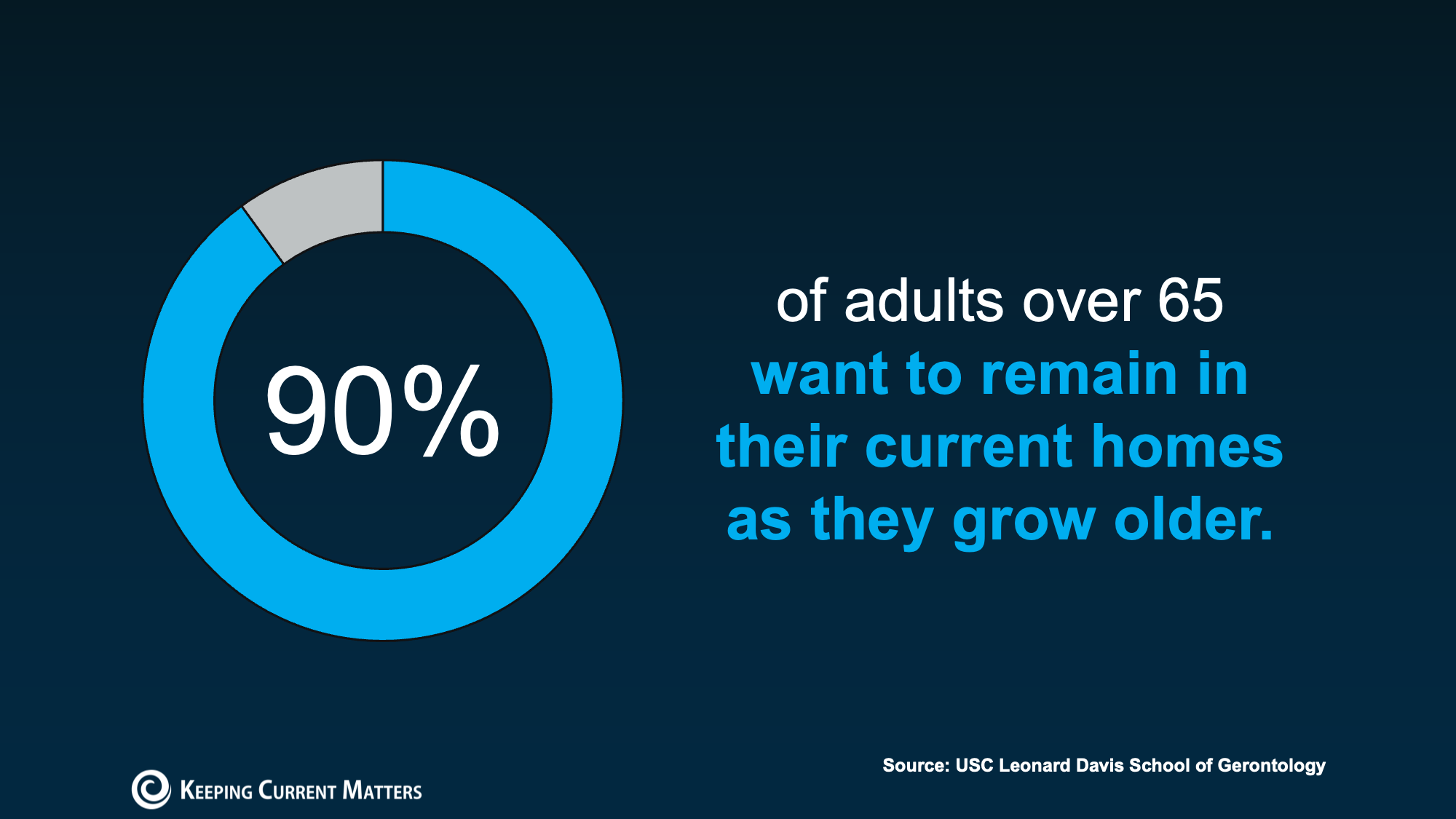
The USC Leonard Davis School of Gerontology found about 90% of adults over 65 prefer to stay in their homes as they get older (see below):
But even if staying feels like the right answer, it’s still worth thinking ahead about what that might actually look like. That’s where the right agent can really help.
What You Need To Plan for If You’re Staying in Your Home
Aging in place is definitely possible. But it’s better if you have a plan. And here’s why. The home that once worked perfectly may need to change with you over the years. And it’s easier if you can anticipate those expenses.
- Sometimes that means small updates: like adding grab bars in the shower.
- Other times, you’ll have to make bigger decisions: like reworking layouts or moving key spaces to the first floor.
Some of those changes are going to be simple. Others can be a meaningful investment. And that’s why thinking about it early matters. Not because you need to decide anything right now, but because it gives you time.
- Time to understand what your home may need.
- Time to explore your options.
- Time to find the right contractors.
- Time to space out the expense of the upgrades.
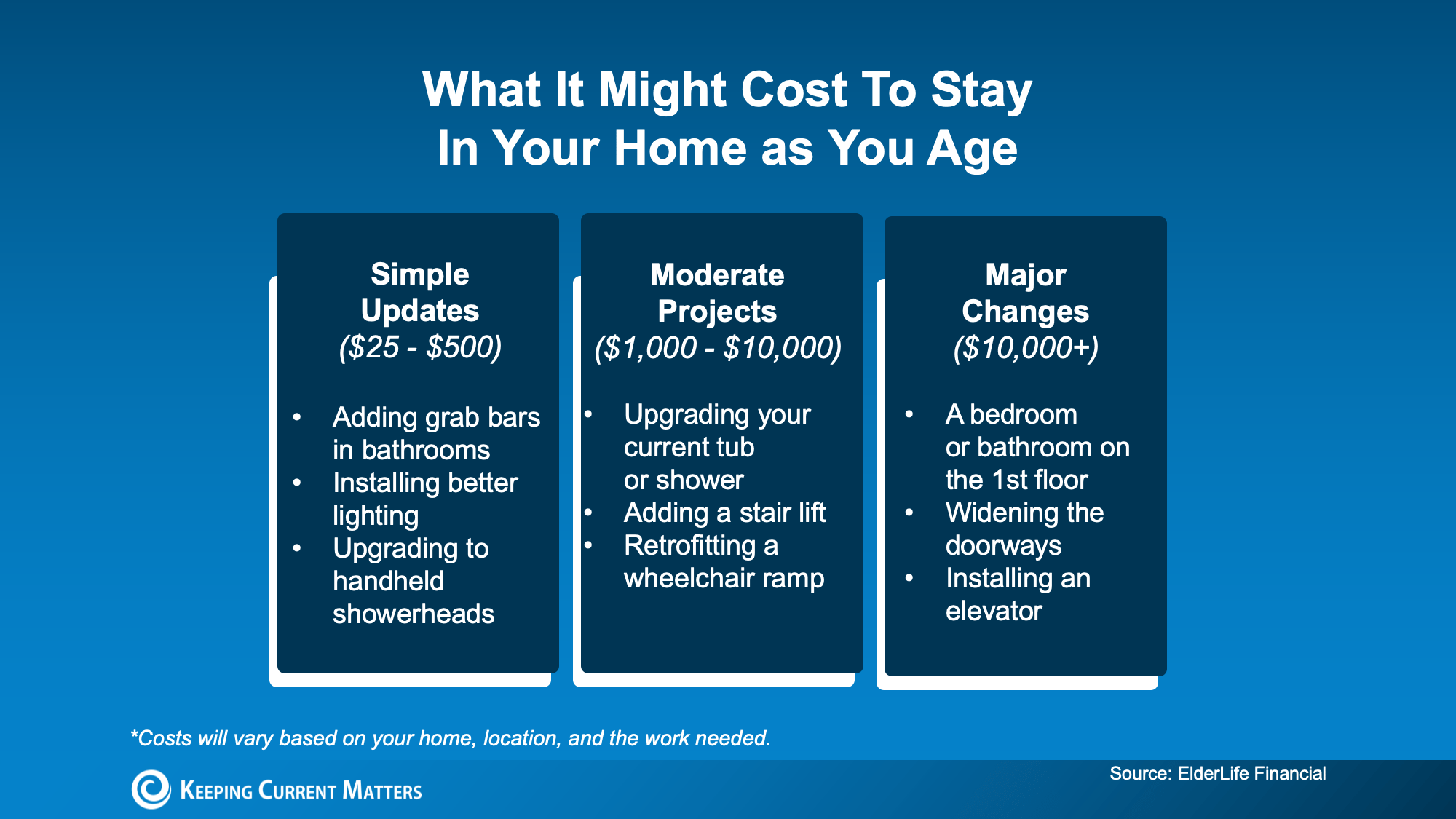
According to ElderLife Financial, here’s a rough baseline of what it could cost depending on what needs to be done (see below):
And don’t worry. If your heart is really set on staying, but the costs feel like a concern, it helps to know you have options. Depending on your situation, there may be financial assistance programs available, along with tools like home warranties to help manage unexpected costs.
Just remember, if you’re thinking about making updates, it’s always worth having a quick conversation before you start. A real estate agent can help you understand which changes tend to make sense for your situation and how they may impact your home’s value based on your local market.
When Moving Might Make More Sense
But staying isn’t always the best fit for every situation. According to Pegasus Senior Living:
“While most seniors hope to age in place, practical considerations sometimes make selling a home the wiser choice.”
Sometimes, it comes down to a simple shift: when the home that once made life easier, starts to make it harder.
That might look like:
- Maintenance or yardwork that’s starting to feel overwhelming
- Stairs or layouts that are getting harder to manage day-to-day
- Or needing more support or care or being too far from loved ones
And sometimes, it’s not about necessity at all. It’s about lifestyle. Some homeowners just don’t want to live through major renovations. Others are ready to simplify, downsize, or move somewhere that better fits this next chapter, whether that’s a smaller home, a 55+ community, or a place closer to family.
For them, moving simply means making daily life easier.
Bottom Line
There’s no one-size-fits-all answer here.
Some people stay and make updates. Others move to simplify things. Either can be the right choice. The goal isn’t to pick one today. It’s to understand your options early, so when the time comes, you feel confident instead of rushed.
And if you ever want a sounding board to think through what the future could look like for you, a local Rockwell Group real estate agent is here to help.
Thinking about whether staying or moving makes more sense for your future? A local real estate expert can help you explore your options, understand your home’s value, and create a plan that fits your lifestyle and long-term goals.
FAQs About Aging in Place and Selling Your Home
Is it better to age in place or move to a smaller home?
It depends on your lifestyle, health needs, finances, and long-term goals. Some homeowners prefer staying and updating their current home, while others choose to downsize for convenience and lower maintenance.
What home modifications help seniors age in place?
Popular upgrades include grab bars, walk-in showers, stair lifts, wider doorways, first-floor bedrooms, non-slip flooring, and improved lighting.
How much does it cost to age in place?
Costs vary depending on the updates needed. Minor accessibility upgrades may cost a few hundred dollars, while major renovations can cost several thousand.
When should seniors consider selling their home?
Many homeowners consider selling when maintenance becomes overwhelming, stairs become difficult, or they want to move closer to family or healthcare services.
Does remodeling increase home value for seniors?
Some updates can improve both safety and resale value. A local real estate agent can help determine which improvements make the most sense for your market.
What are the benefits of downsizing later in life?
Downsizing can reduce maintenance, lower monthly expenses, simplify daily living, and free up home equity for retirement or travel.
Find out what your home is worth >
Explore downsizing options in Oregon and Arizona >
Talk with a local real estate expert >
Courtesy of Keeping Current Matters
Aging in Place vs Downsizing, Senior Home Planning Tips, When To Sell Your Home as You Get Older, Home Updates for Aging in Place, Downsizing Options for Seniors
