Real Estate Blog

May 18, 2026

Think You Have To Put 20% Down? Most First-Time Homebuyers Don’t.

Think You Have To Put 20% Down? Most First-Time Homebuyers Don’t.

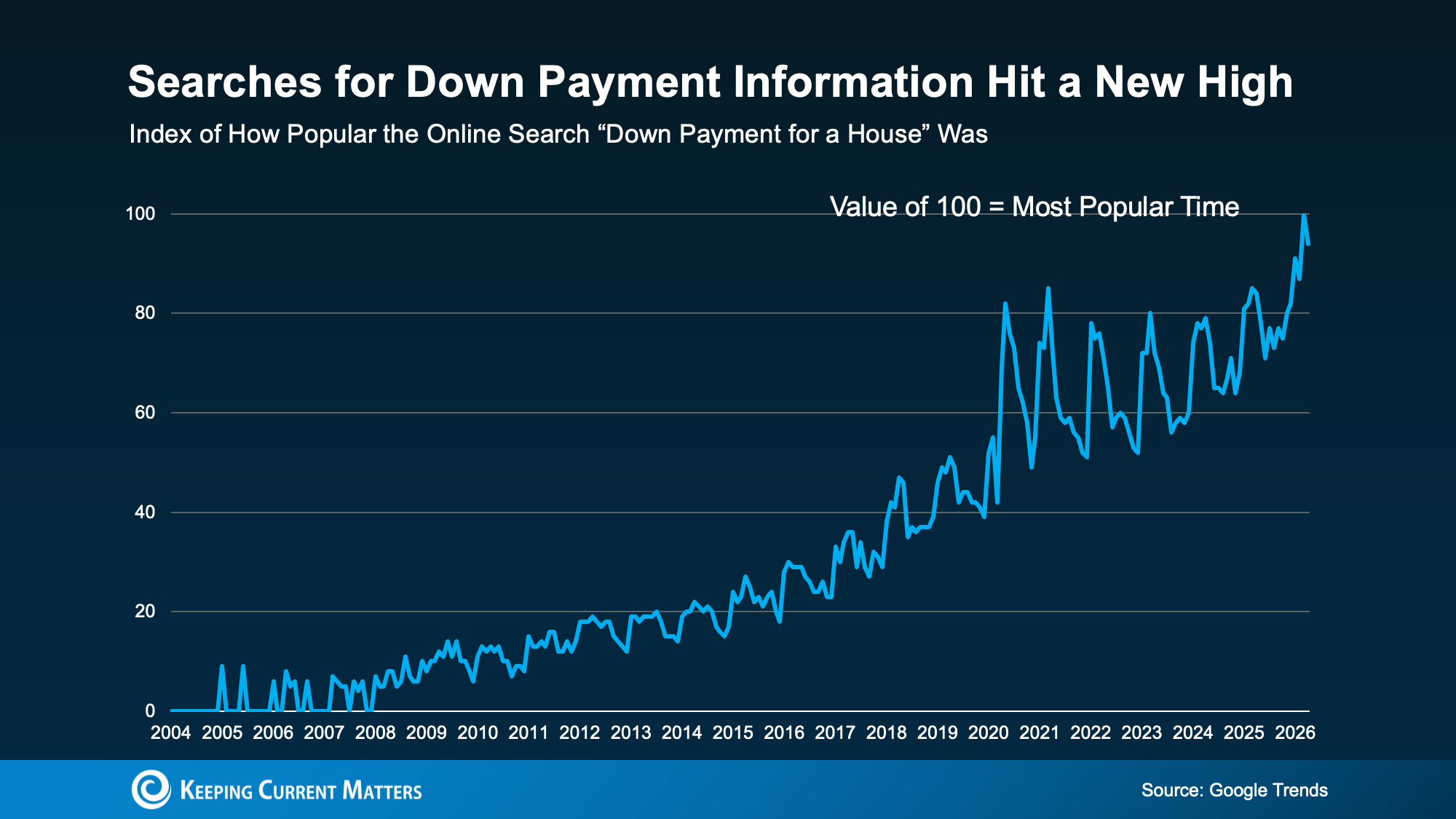
According to Google Trends, online searches for down payment information recently hit an all-time high. And that’s a clear sign more buyers are trying to figure out what they really need to save before making a move (see graph below):

a graph of a line graphIf you’re wondering the same thing, you can always turn to the internet for answers. But a lot of the time, it’s better to ask a local expert. Because here’s what a pro would tell you.
The 20% Down Payment Myth

The idea that you need 20% down to buy a home is one of the biggest misconceptions around the homebuying process. And the data debunks the myth.

While there are benefits to putting that much money down, most first-time buyers put down far less.

Here’s why. Unless it’s stated by your lender, you typically don’t have to have a 20% down payment. There are even some loan options designed to help you get into a home with a much smaller upfront cost. As the Mortgage Reports explains:

“The amount you need to put down will depend on a variety of factors, including the loan type and your financial goals. If you don’t have a large down payment saved up, don’t worry—there are plenty of options available, and you don’t need to put down the traditional 20% . . . many homebuyers are able to secure a home with as little as 3% or even no down payment at all . . .”

For example, FHA loans allow down payments as low as 3.5%, while VA and USDA loans offer zero down payment options for qualified applicants, like Veterans.

And those options are just one reason so many first-time buyers are able to buy without a 20% down payment.

What Buyers Are Actually Putting Down

So, if buyers aren’t doing 20%, how much do they actually put down?

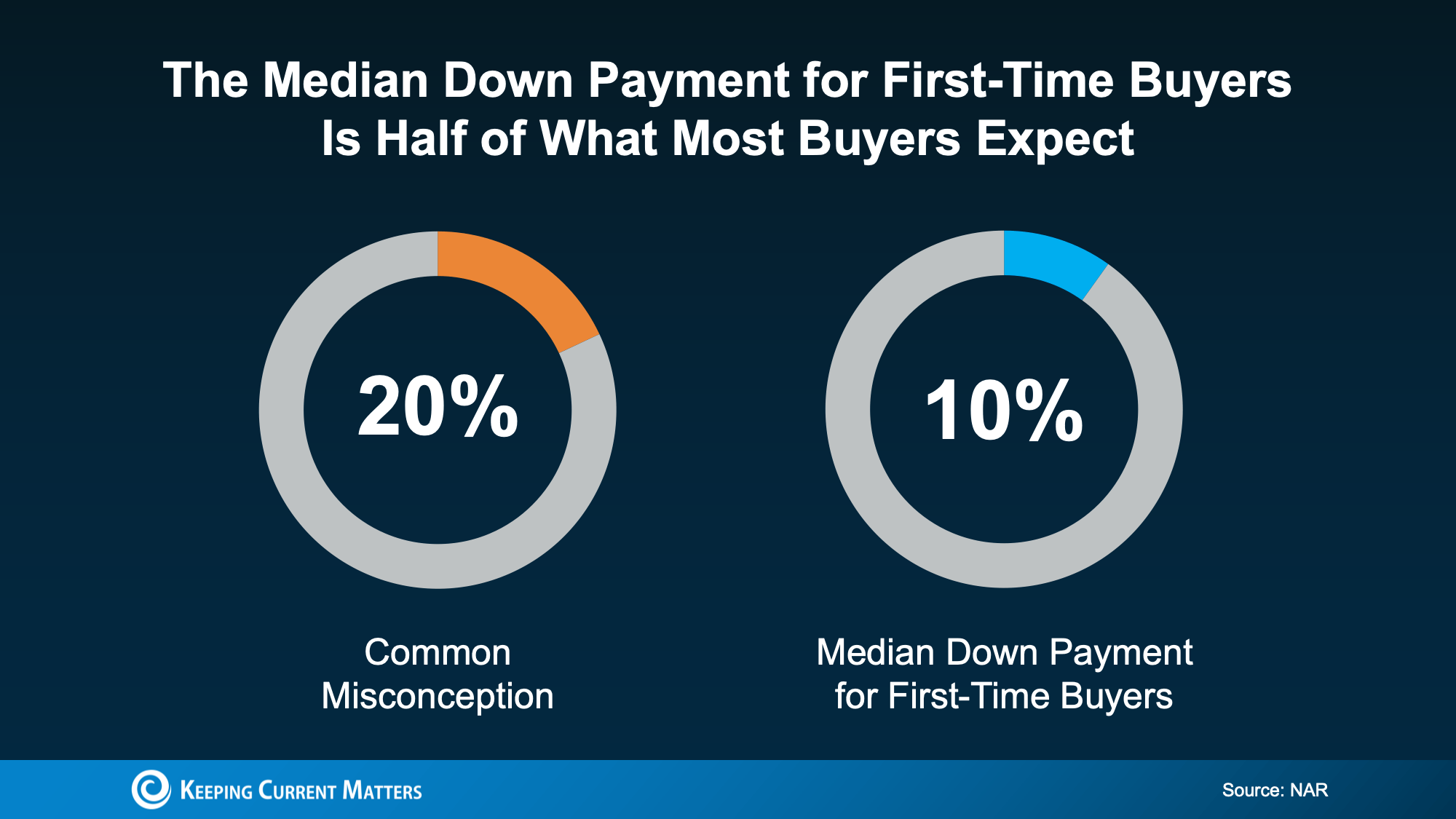
According to the National Association of Realtors (NAR), the median down payment for first-time homebuyers is only 10%. That’s half of what you probably expected.

a diagram of a pie chartThat means if you’re aiming to save 20% because you think you have to, you may be setting a timeline that’s longer than necessary.  
And here’s some more good news. It’s not only that you may be able to buy with less money down than you thought, but there are also options to help you get to your down payment goal even faster.

Why You Should Look into Down Payment Assistance Programs

There are a lot of programs designed to help you save for a down payment – and they can make a big difference in how fast you hit your savings target. Unfortunately, buyers don’t realize how many there are, or that they may qualify for help.

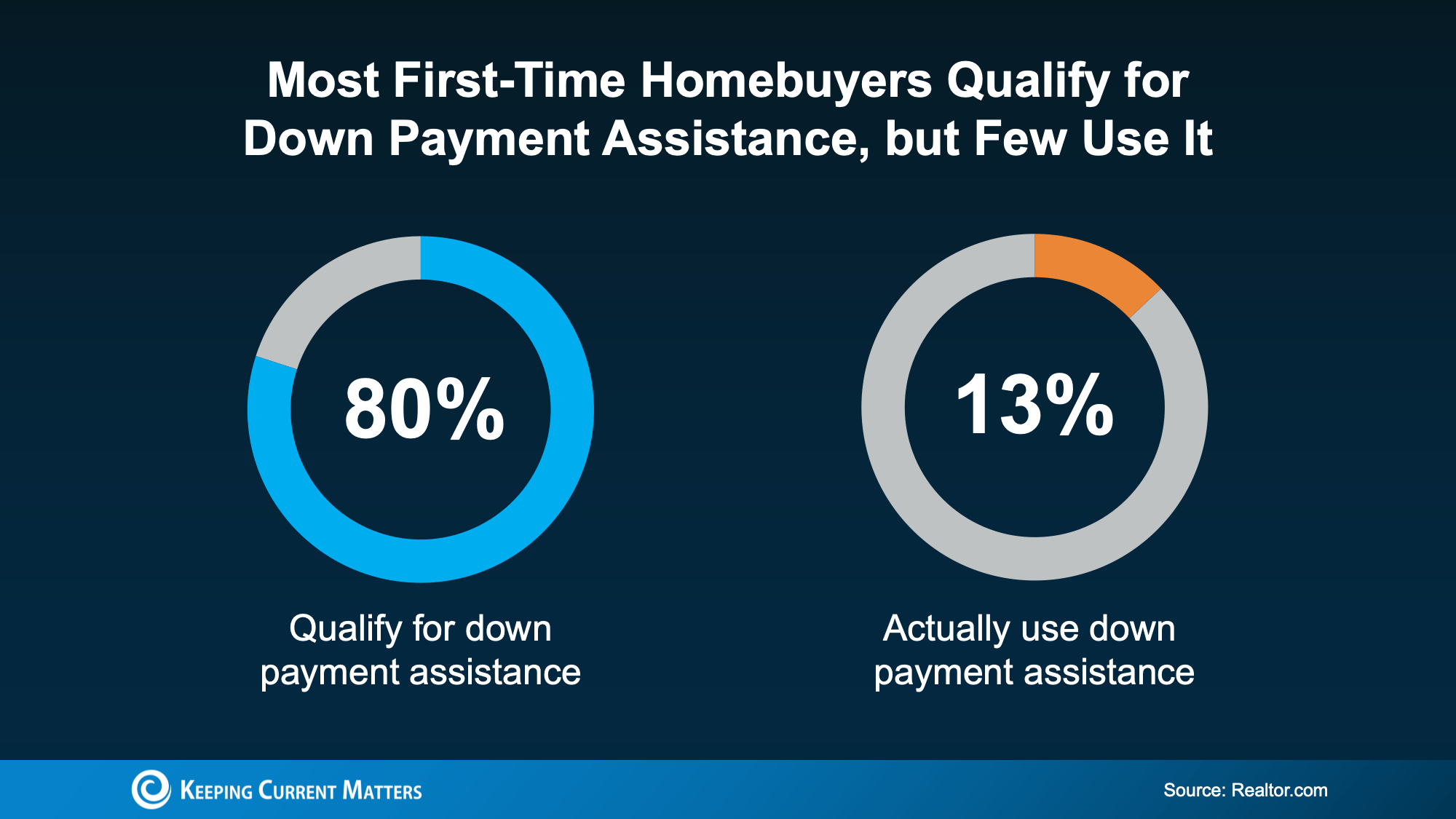
Research from Realtor.com shows almost 80% of first-time homebuyers qualify for down payment assistance (DPA), but only 13% actually use it (see chart below): 

a blue and orange pie chartAnd that’s another big miss holding would-be buyers like you back.
In the U.S., there are over 2,600 homeownership programs available, many offering significant financial support. As Down Payment Resource shares:

“With an average benefit of $18,000, down payment assistance (DPA) remains one of the most essential tools for addressing the nation’s affordability challenges. Programs continue to expand in scope, serving a broader range of incomes, property types and borrower needs, including first-generation, military and repeat buyers.”

Imagine how much further your savings could go with an extra $18,000 you can use to buy. In some cases, you may even be able to stack multiple programs, giving what you’ve saved an even bigger boost.


FAQs About Down Payments for First-Time Buyers

Do you really need a 20% down payment to buy a house?
No. Many first-time homebuyers purchase homes with much smaller down payments depending on the loan program they use.

What is the average down payment for first-time homebuyers?
According to the National Association of Realtors, the median down payment for first-time buyers is around 10%.

Can you buy a house with 3% down?
Yes. Some conventional loan programs allow qualified buyers to purchase a home with as little as 3% down.

What loans offer low or zero down payment options?
FHA loans can allow down payments as low as 3.5%, while VA and USDA loans may offer zero down payment options for eligible buyers.

What is down payment assistance?
Down payment assistance programs provide grants, loans, or financial help to qualified homebuyers to reduce upfront costs.

Who qualifies for down payment assistance programs?
Qualification depends on income, location, loan type, occupation, military status, and other factors. Many first-time buyers may qualify without realizing it.


Can you combine multiple down payment assistance programs?
In some cases, yes. Certain buyers may qualify for multiple assistance programs to reduce their upfront costs even further.


Key Takeaways


  • Most first-time buyers do not put 20% down.
  • Some loan programs allow down payments as low as 3% or even 0% for qualified buyers.
  • Down payment assistance programs may help reduce upfront costs.
  • Many buyers qualify for assistance without realizing it.
  • Talking with a lender can help you understand your real options sooner than expected.

Bottom Line

The simple truth is: most first-time buyers don’t put 20% down. And if you’ve been waiting to buy until you have that saved, you may be setting a timeline that’s longer than necessary.

Wondering how much you really need to buy a home? A trusted lender or local real estate expert can help you explore loan options, down payment assistance programs, and what may be possible based on your goals and budget.

To find out what you really need to save and if you qualify for any help, connect with a trusted lender who can walk you through your options. You may be able to buy sooner than you thought.


Courtesy of Keeping Current Matters

The Truth About the 20% Down Payment Myth, Low Down Payment Mortgage Options, First-Time Homebuyer Assistance Programs, How To Buy a Home With Less Money Down, What First-Time Buyers Should Know About Down Payments, Ways To Save on Upfront Homebuying Costs



May 18, 2026

3 Things That Are Not Going To Happen in Today's Housing Market

3 Things That Are Not Going To Happen in Today


There’s a lot of uncertainty right now and that’s leading to some dramatic headlines. And if you’re thinking about buying a home, that can make you feel a little less sure about your decision.

A recent study by CNBC asked homebuyers what they’re most worried about, and three themes kept coming up again and again:

  • Mortgage rates
  • The number of homes for sale
  • Home prices

But a lot of what you may be hearing on those is based more on misconceptions. Not facts. So, let’s break it down and separate fact from fiction.

Misconception #1: “I’ll Just Wait, Because Mortgage Rates Are Going To Fall Dramatically”

One idea doing its rounds on social is that mortgage rates are going to drop dramatically soon. So, it’s better to wait to buy.

But is that really what’s expected?

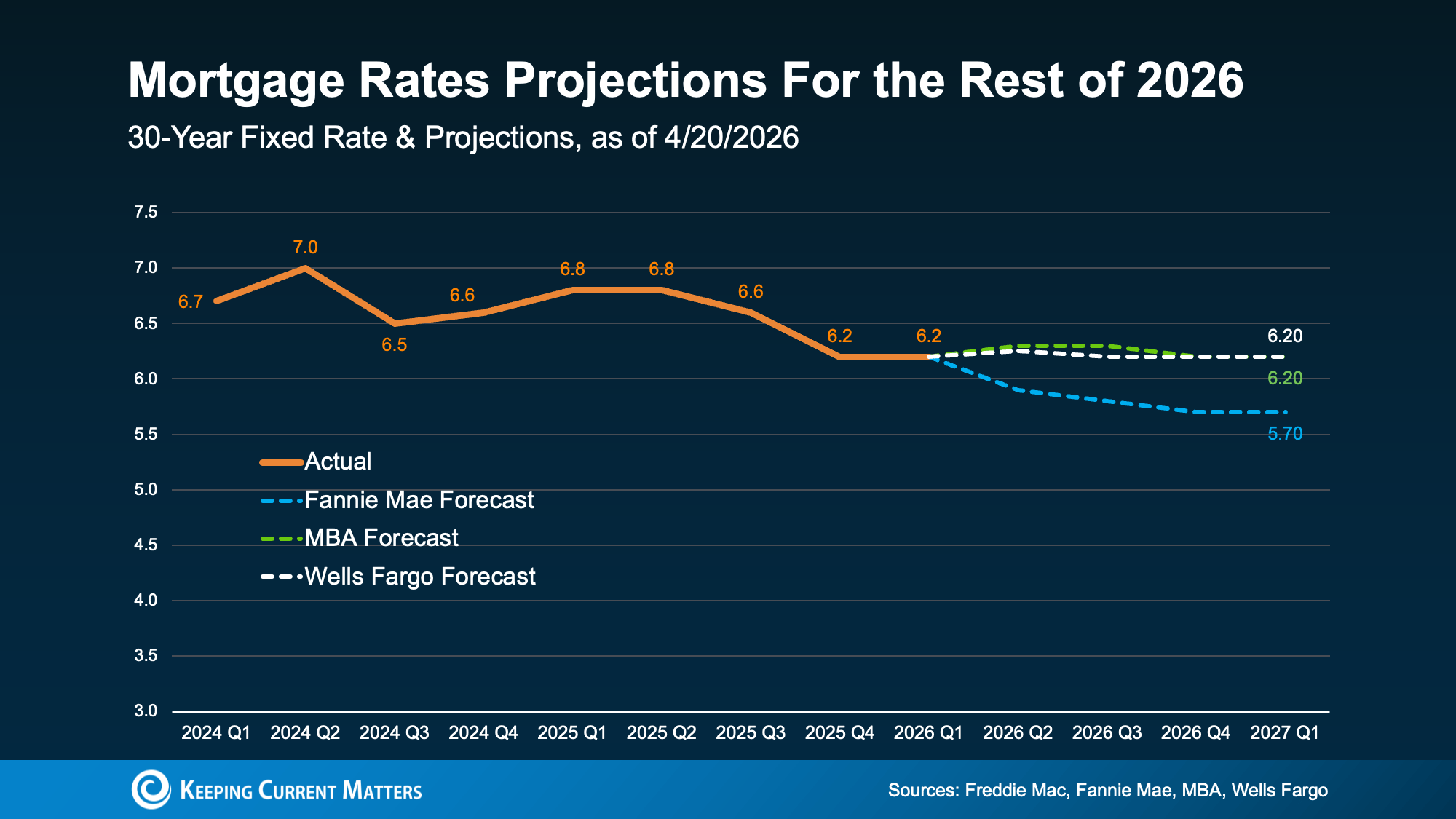
While mortgage rates have come down a bit in the last few weeks, forecasts don’t show a major drop ahead. The most likely scenario is that rates stay somewhere in the low 6% range this year. 

And that’s not a big change from where rates are now (see graph below): 

a graph with numbers and linesOf course, this depends on where inflation and the economy go from here. But, based on what we know today, waiting for a big drop in rates may not work out the way some people hope. As U.S. News explains:

“Mortgage rates aren’t expected to change much over the next several quarters . . .”

Not to mention, even with rates where they are today, it’s already more affordable than a year ago. So, even if they don’t change much, it’s still better than it was.

Misconception #2: “There Are Too Many Homes for Sale Right Now”

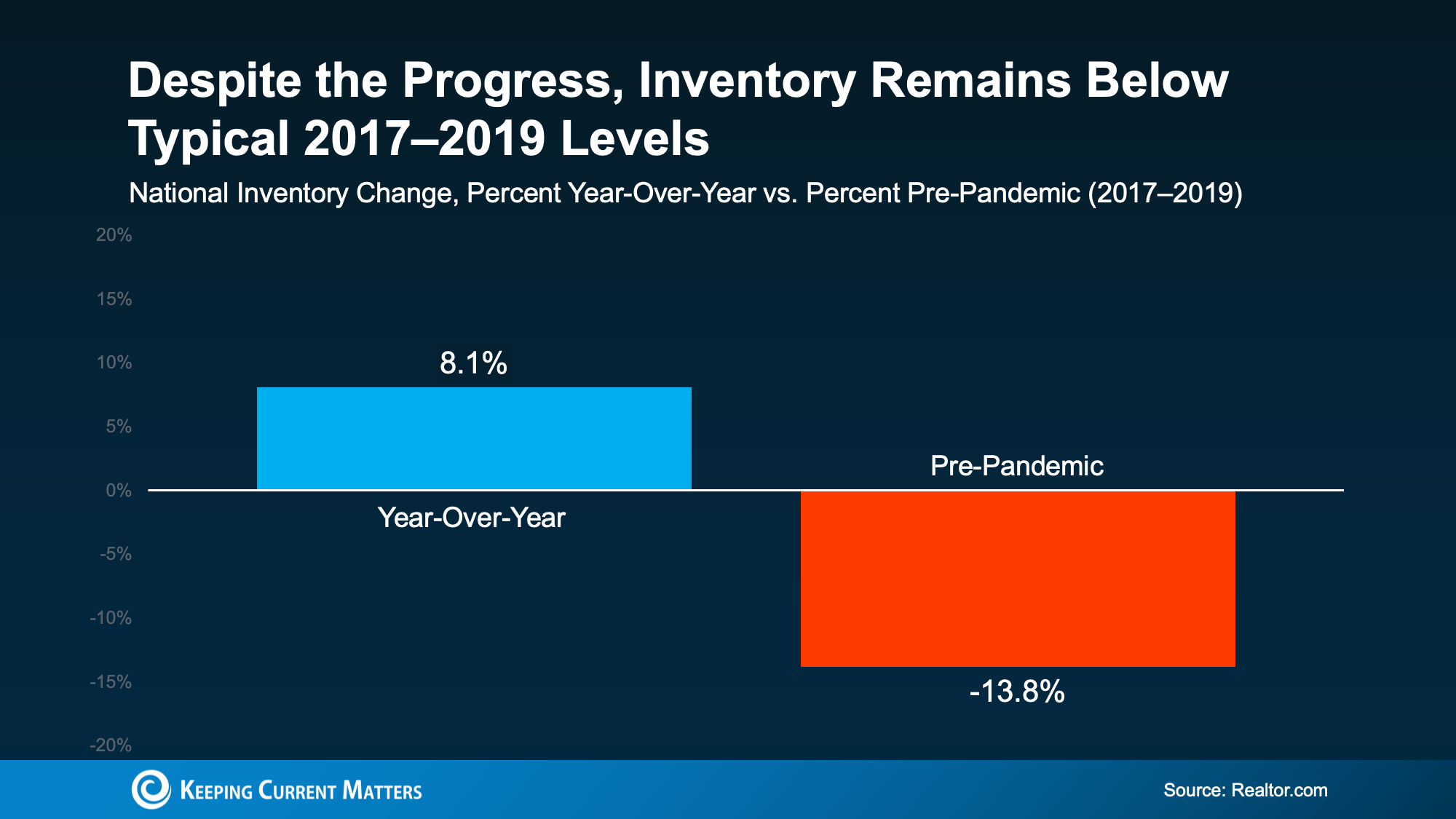
You’ve probably heard inventory is up. And nationally, it is. The number of homes for sale is 8% higher than this time last year. But that’s not a bad thing. In fact, it’s one of the reasons buyers have a bit more breathing room right now.

The problem is the headlines are making something good, sound bad. They’re focusing on how this is the most inventory we’ve had since 2019 or how many homes builders are building. And that can make it sound like the number of homes for sale is rising too far, too fast.

But that’s not what the bigger picture shows.

Data from Realtor.com proves that, even though inventory is up compared to last year, it’s still nearly 14% lower than it was during the last normal housing market (2017-2019):

While it can vary a lot based on where you live, only 9 states have more inventory than pre-pandemic today. That’s a key reason why there still aren’t enough homes for sale to trigger something like the crash back in 2008.
Misconception #3: “Home Prices Are About To Crash”

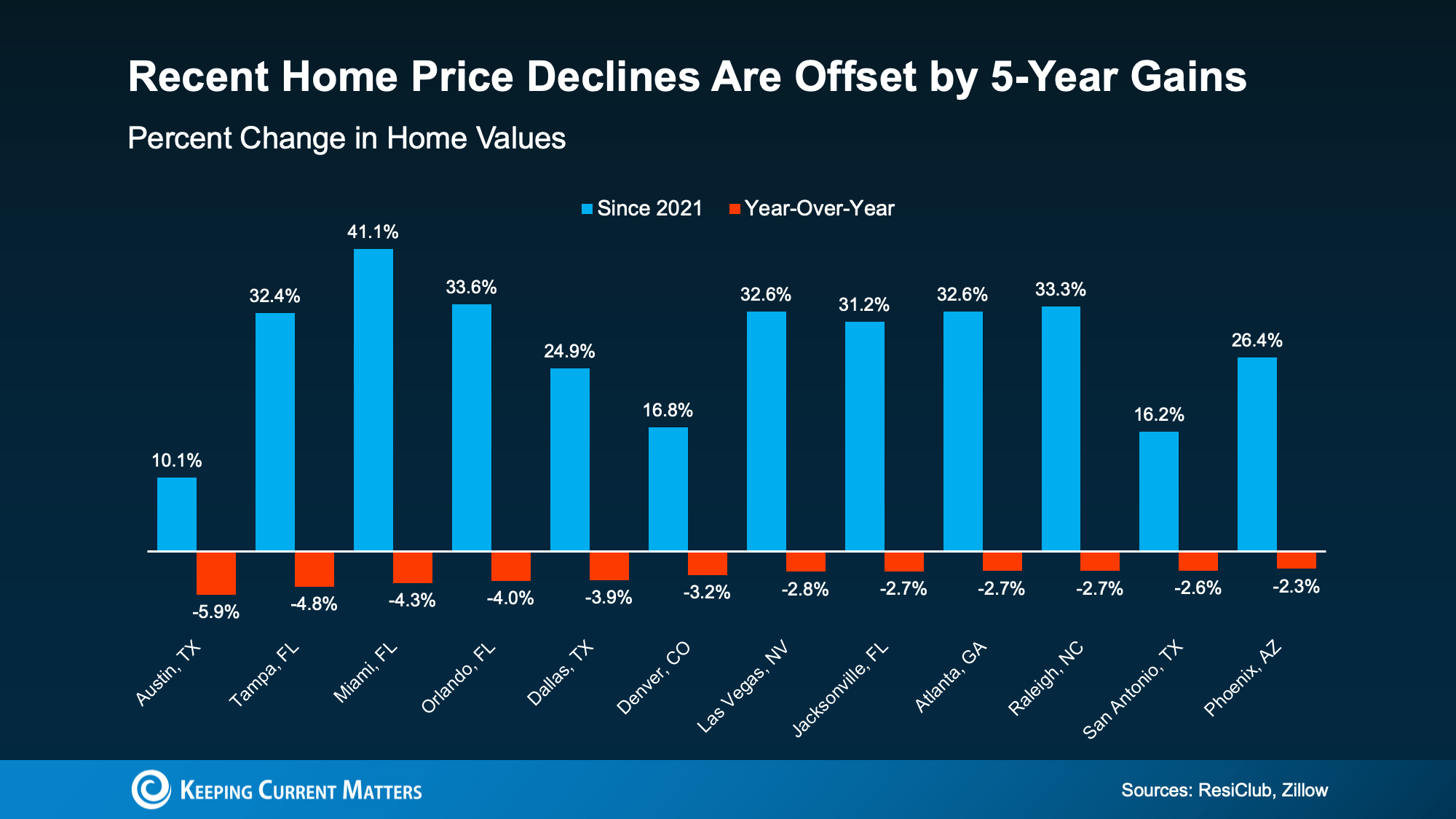
You’ve probably seen this one, too. The confusion is coming from the fact that some metros are experiencing slight price declines. And influencers are running with that and saying prices are crashing. But that’s not the reality.

Most areas are seeing prices rise, not fall. And that’s because:

  • Many homeowners aren’t selling because they don’t want to give up the low mortgage rate they locked in a few years ago. And that’s keeping a lid on how much inventory can grow.
  • Since inventory is still below pre-pandemic norms, there aren’t enough homes for sale to cause a price crash.
  • And even in markets with more inventory, some sellers are choosing to pull their homes off the market instead of cutting prices.

And those are 3 big reasons prices aren’t headed for a crash. 

And even in the markets experiencing mild declines, the drops aren’t enough to cancel out the big gains most homeowners have seen in the last 5 years (see graph below):

That’s not a crash. That’s just prices moderating after a few record-breaking years.

FAQs About Today’s Housing Market

Are mortgage rates expected to drop significantly in 2026?
Most forecasts suggest mortgage rates may fluctuate slightly but are expected to remain relatively stable in the low-to-mid 6% range unless inflation or the economy changes dramatically.

Is the housing market going to crash?
Most experts do not expect a housing market crash because inventory remains below pre-pandemic norms in many markets and homeowner equity remains strong.

Are there too many homes for sale right now?
Inventory has increased compared to last year, but nationally, housing supply is still below normal historical levels in many areas.

Why are home prices still rising in many markets?
Prices continue rising in many regions because demand remains steady while the number of homes for sale is still limited.

Should I wait to buy until mortgage rates fall?
Waiting for a dramatic drop in rates may not pay off if home prices continue rising or buyer competition increases again later.


What’s causing confusion about the housing market right now?
Many online headlines focus on isolated market trends or short-term data without showing the full national and local market picture.


Quick Market Facts


  • Mortgage rates are expected to stay relatively stable this year.
  • Housing inventory is improving, but still below normal levels in many markets.
  • Most markets are still seeing home price growth, not crashes.
  • Buyers today have more options and negotiating power than during the pandemic market.
  • Local market conditions matter more than national headlines.


Bottom Line

Online posts are going to make things sound worse than they are. If you want a true, data-bound look at what’s really happening in today’s market, lean on a real estate agent.

Trying to make sense of today’s housing market? A local real estate expert can help you understand what’s really happening in your area so you can make confident decisions based on facts, not fear.

Connect with a local agent so you have someone to separate fact from fiction today.


Courtesy of Keeping Current Matters

Will Mortgage Rates Drop in 2026? Is the Housing Market Going To Crash? Why Inventory Levels Matter. What Buyers Need To Know About Today’s Market. Housing Market Facts vs Myths. Should You Wait To Buy a Home?


May 18, 2026

The Pricing Mistake That Could Cost You Your Sale

The Pricing Mistake That Could Cost You Your Sale


Most sellers come into the market with one number in mind. And it’s often the one that costs them the most. That’s their asking price. 

A survey from Realtor.com shows about 8 in 10 (80%) of sellers expect to sell at or above their asking price today. But here’s where things get interesting.

In reality, only about 4 out of every 10 (roughly 40%) actually do.

That’s a big gap. And it’s where a lot of sellers get caught off guard. So, why the disconnect? And how can you set yourself up to be one of the 4 in 10 that get top dollar? 

Let’s break it down.

What Should You Really Expect To Get for Your House? 

That 40% may sound low at first, but it’s not.

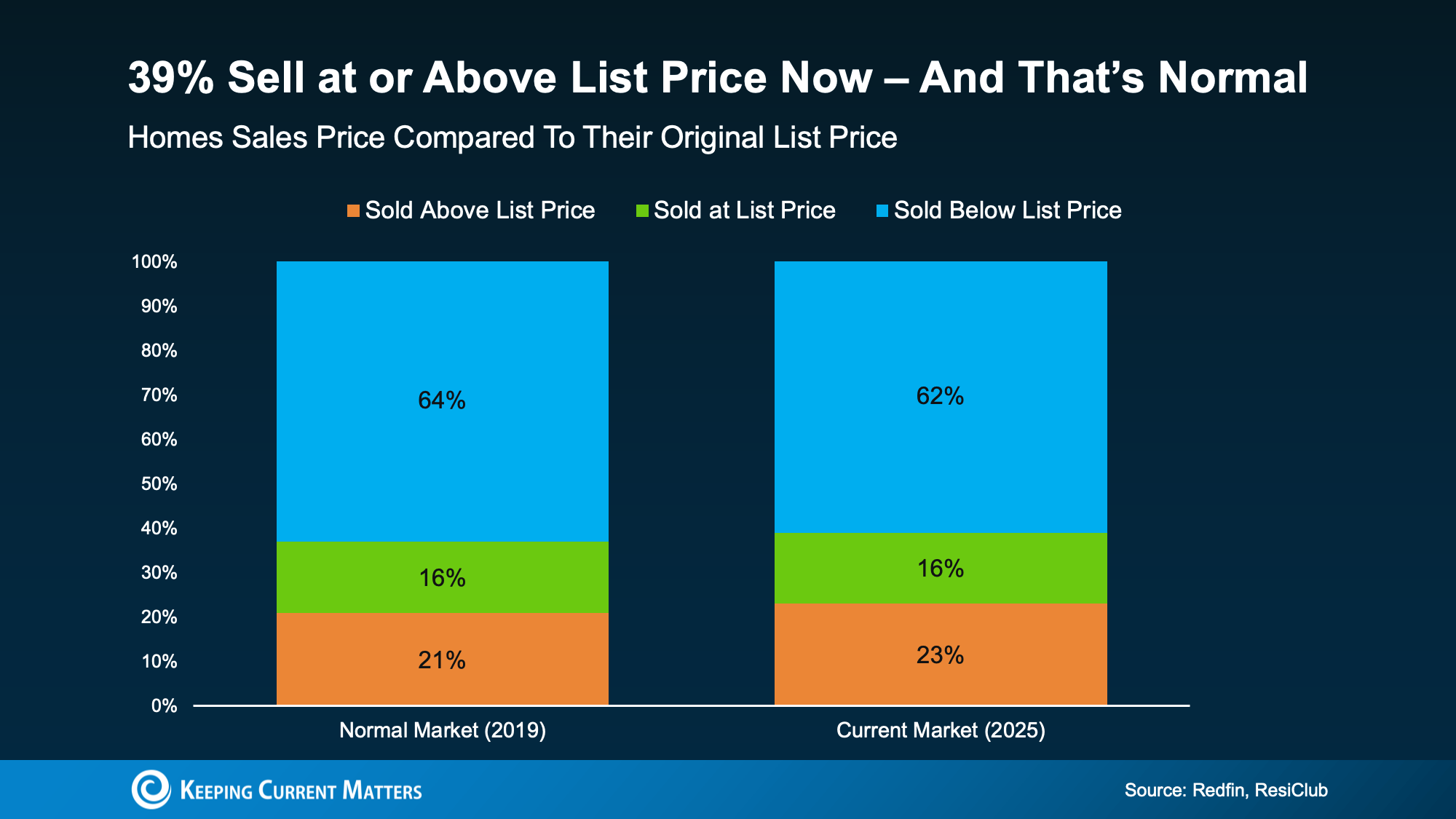
If you look back to the last typical year for the housing market (2019), what we’re really seeing is a return to what’s normal (see chart below). If anything, slightly more homeowners are able to sell above list price today compared to 2019:

a graph of a marketIt only feels low because the past few years were anything but typical. Between 2020 and mid-2022, buyer demand was sky-high and the number of homes for sale was at record lows. Almost everything sold over asking. 

Now, the market has shifted.

There are more homes for sale. Buyers have more options. And that means they’re more selective about how they spend their money.

In other words, the rules have changed – and pricing like it’s still 2021 is where sellers run into trouble. You have to meet the market where it is if you really want to cash in big.

What Happens When a Home Is Priced Too High

Here’s the reality. It’s easy to think pricing high gives you room to negotiate. But it usually does the opposite.

When your home is priced above what buyers expect, in this market, they don’t negotiate. They move on.

Because buyers notice price first. And if your home doesn’t line up with similar options in your area, it may not even get a showing. And that’s when things start to snowball:

  • A high price gets less interest from buyers.

  • Less interest means fewer offers.

  • And fewer offers usually means more time on the market.

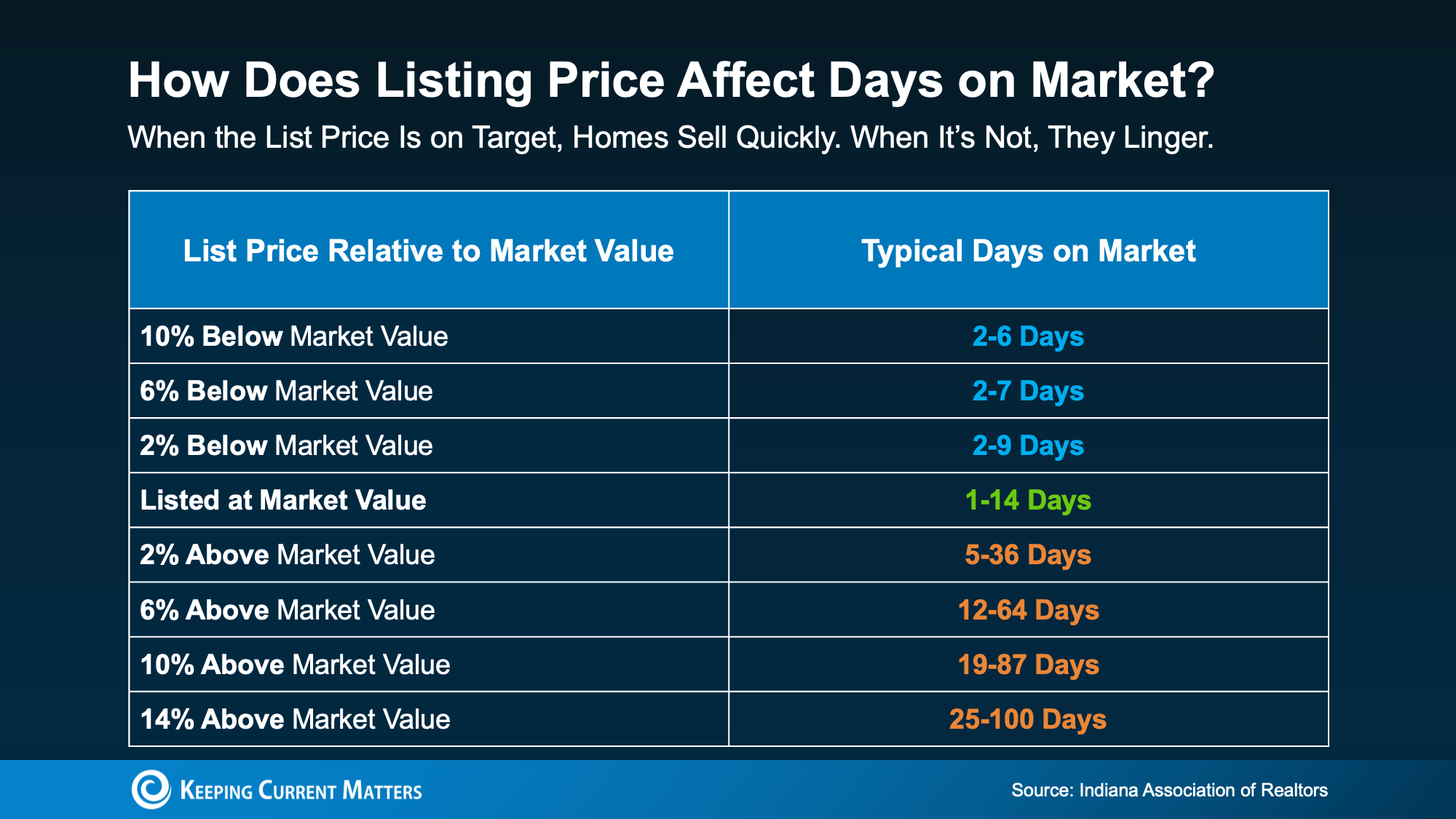
Take a look at this table from the Indiana Association of Realtors. While this data is from one state, the general trend is going to hold true across many markets in the country. It shows that homes listed at or under market value sell fast. But homes priced high? They linger. And that delay comes at a very real cost.

The Price Cut Trap (And How To Avoid It)
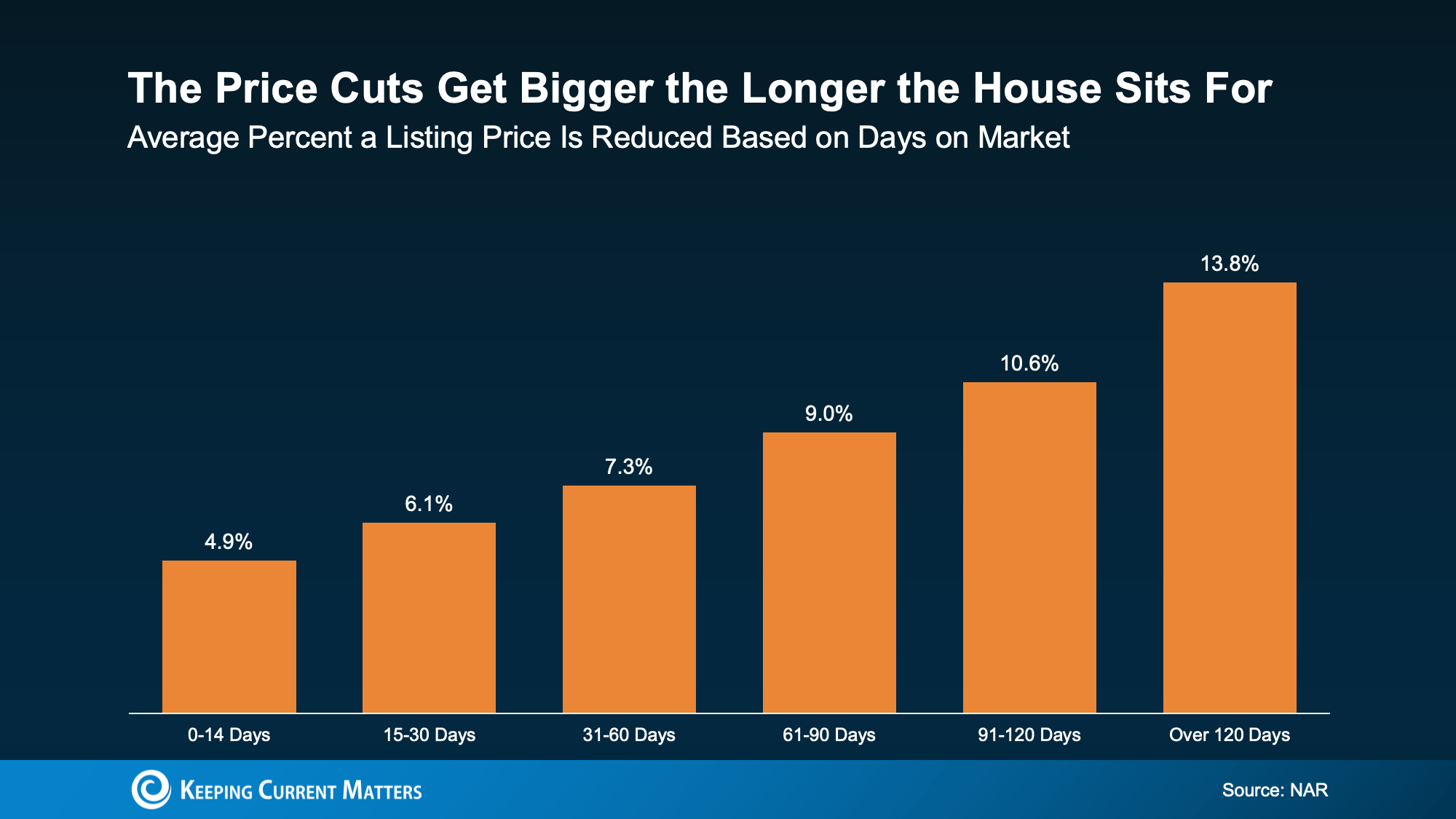
When a home sits that long without offers, a lot of sellers will do a price reduction. According to Realtor.com, 16.7% of sellers are going that route today.

But here’s the real problem. Even a price cut doesn’t guarantee a sale.

In fact, some buyers will see a reduction as a sign something’s wrong with the house – even when nothing is.

That’s why data from the National Association of Realtors (NAR) shows the longer a home sits, the bigger that price cut tends to be to attract buyers back:

So, what starts as a strategy to “leave room” for negotiate can end up costing you more in the long run.

Why Pricing Right from Day One Matters

Even though listing at or even just shy of market value may sound counter intuitive if you’re looking to get as much money for your house as possible, a lot of the time it really is the best strategy.

Because the goal isn’t just to list your house to see what price sticks. It’s to price it in a way that creates demand from day one.

NAR puts it best:

“While some sellers are pricing their homes higher than ever, a more ‘goldilocks’ frame of mind is a better approach to avoid price cuts and lingering time on the market.”

In other words, there’s a sweet spot. Too high, and buyers disappear. Too low, and they question the value.

But right in the middle? That’s where the magic happens.

And that’s where the right agent comes in.

They help you understand what buyers are actually paying right now, how your home compares, and how to price it so it stands out immediately. And in today’s market, that strategy is the difference between:

  1. Listing high, watching it sit, and selling for less later.

  2. Or, pricing it right, creating competition, and putting yourself in a position to win from the start.

FAQs About Pricing Your Home To Sell

What happens if you price your house too high?
Overpricing a home can lead to fewer showings, less buyer interest, longer time on the market, and eventual price reductions that may hurt buyer confidence.

Is pricing high to leave room for negotiation a good strategy?
In today’s market, buyers are more selective. Many overpriced homes are skipped entirely instead of receiving lower offers.

Why do homes sit on the market longer now?
With more inventory available, buyers have more options and compare prices carefully. Homes that don’t align with market value often stay unsold longer.

Do price reductions hurt a home sale?
Sometimes. Buyers may assume something is wrong with the property when they see multiple price cuts or extended time on the market.

What is the best pricing strategy when selling a house?
The best strategy is usually pricing at or near current market value from day one to attract strong interest and competitive offers.


How does a real estate agent help with pricing?
A local agent analyzes comparable sales, buyer demand, local inventory, and market trends to help determine a competitive listing price.


Key Takeaways

  • Overpricing a home can reduce buyer interest and delay a sale.
  • Today’s buyers have more options and are comparing prices carefully.
  • Homes priced correctly from day one tend to sell faster.
  • Price reductions can sometimes create buyer hesitation.
  • A local real estate agent can help determine the right pricing strategy.


Bottom Line

A lot of homeowners think they can list high now and negotiate later, but that’s a mistake that costs them. And it’s the reason only 4 out of every 10 sellers are getting their asking price or more.

If you want to be in that group, it starts with getting the price right from day one.

Connect with a local agent to make sure you are.

Wondering what your home could realistically sell for in today’s market? A local real estate expert can help you price strategically, attract serious buyers, and avoid costly pricing mistakes from the start.


Find out what your home is worth >

See what homes are selling for in Oregon and Arizona > 

Get a personalized pricing strategy > 


Courtesy of Keeping Current Matters


Why Overpricing Your Home Backfires, The Risks of Pricing Too High, How Buyers React to Overpriced Homes, Why Correct Pricing Matters in Today’s Market, The Best Strategy for Selling Your Home Faster, How To Avoid Price Reductions


May 18, 2026

Stay or Sell? How To Make the Right Call as You Age


At some point, as you start thinking about the years ahead, this question tends to come up:

“Could I stay here long-term… or would it make more sense to move?”

It’s not always urgent. It often shows up in small moments, like going up and down the stairs, keeping up with the maintenance, or just thinking about what the next chapter of your life might look like in this home.

And for most people, the answer is simple. They want to stay.

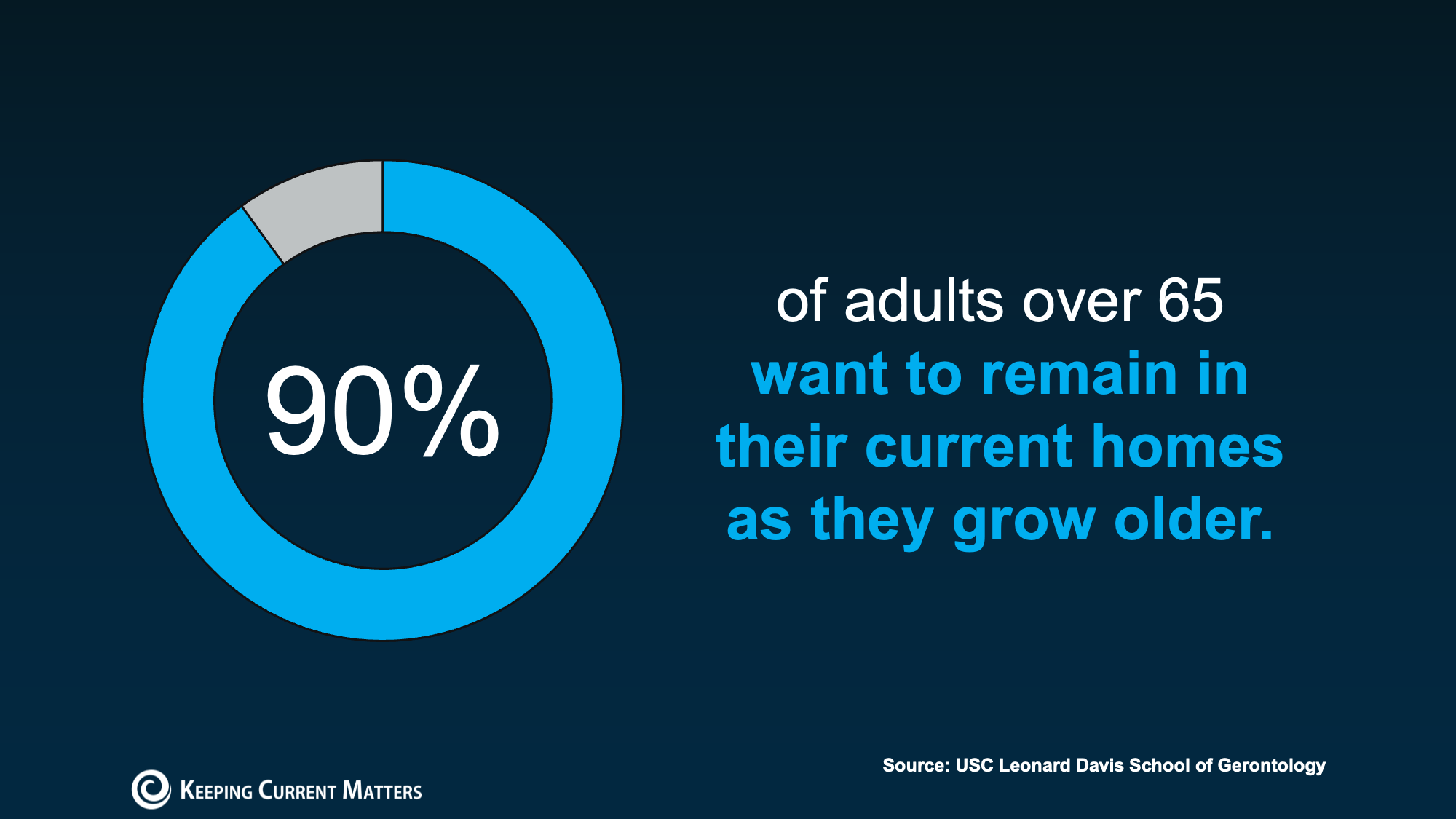
The USC Leonard Davis School of Gerontology found about 90% of adults over 65 prefer to stay in their homes as they get older (see below):

a blue circle with white textBut even if staying feels like the right answer, it’s still worth thinking ahead about what that might actually look like. That’s where the right agent can really help.

What You Need To Plan for If You’re Staying in Your Home

Aging in place is definitely possible. But it’s better if you have a plan. And here’s why. The home that once worked perfectly may need to change with you over the years. And it’s easier if you can anticipate those expenses.

  • Sometimes that means small updates: like adding grab bars in the shower.
  • Other times, you’ll have to make bigger decisions: like reworking layouts or moving key spaces to the first floor.

Some of those changes are going to be simple. Others can be a meaningful investment. And that’s why thinking about it early matters. Not because you need to decide anything right now, but because it gives you time.

  • Time to understand what your home may need.
  • Time to explore your options.
  • Time to find the right contractors.
  • Time to space out the expense of the upgrades.

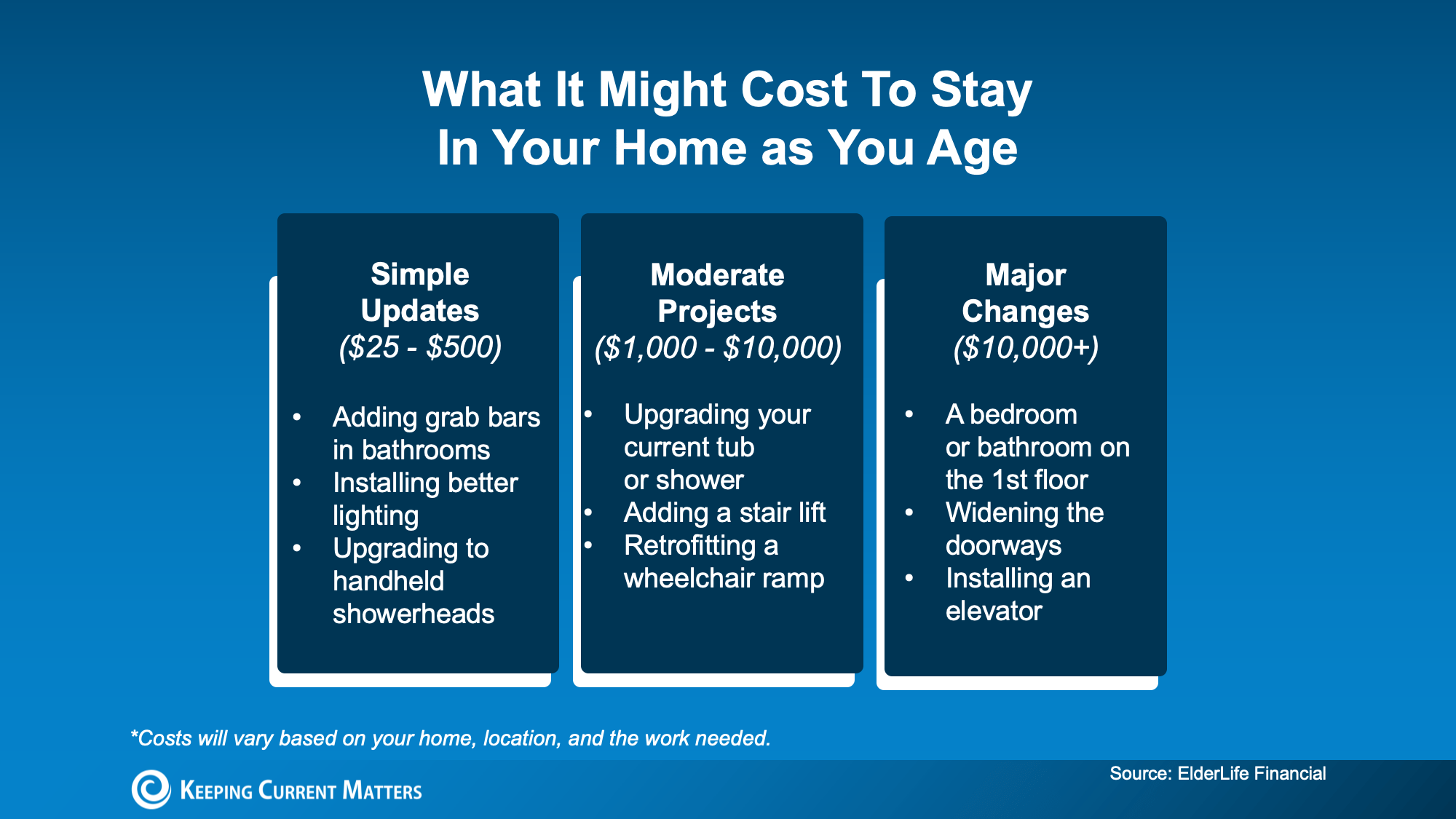
According to ElderLife Financial, here’s a rough baseline of what it could cost depending on what needs to be done (see below):

a blue and white rectangular signAnd don’t worry. If your heart is really set on staying, but the costs feel like a concern, it helps to know you have options. Depending on your situation, there may be financial assistance programs available, along with tools like home warranties to help manage unexpected costs.

Just remember, if you’re thinking about making updates, it’s always worth having a quick conversation before you start. A real estate agent can help you understand which changes tend to make sense for your situation and how they may impact your home’s value based on your local market.

When Moving Might Make More Sense

But staying isn’t always the best fit for every situation. According to Pegasus Senior Living:

“While most seniors hope to age in place, practical considerations sometimes make selling a home the wiser choice.”

Sometimes, it comes down to a simple shift: when the home that once made life easier, starts to make it harder.

That might look like:

  • Maintenance or yardwork that’s starting to feel overwhelming
  • Stairs or layouts that are getting harder to manage day-to-day
  • Or needing more support or care or being too far from loved ones

And sometimes, it’s not about necessity at all. It’s about lifestyle. Some homeowners just don’t want to live through major renovations. Others are ready to simplify, downsize, or move somewhere that better fits this next chapter, whether that’s a smaller home, a 55+ community, or a place closer to family. 

For them, moving simply means making daily life easier.

Bottom Line

There’s no one-size-fits-all answer here.

Some people stay and make updates. Others move to simplify things. Either can be the right choice. The goal isn’t to pick one today. It’s to understand your options early, so when the time comes, you feel confident instead of rushed.

And if you ever want a sounding board to think through what the future could look like for you, a local Rockwell Group real estate agent is here to help.

Thinking about whether staying or moving makes more sense for your future? A local real estate expert can help you explore your options, understand your home’s value, and create a plan that fits your lifestyle and long-term goals.


FAQs About Aging in Place and Selling Your Home

Is it better to age in place or move to a smaller home?
It depends on your lifestyle, health needs, finances, and long-term goals. Some homeowners prefer staying and updating their current home, while others choose to downsize for convenience and lower maintenance.

What home modifications help seniors age in place?
Popular upgrades include grab bars, walk-in showers, stair lifts, wider doorways, first-floor bedrooms, non-slip flooring, and improved lighting.

How much does it cost to age in place?
Costs vary depending on the updates needed. Minor accessibility upgrades may cost a few hundred dollars, while major renovations can cost several thousand.

When should seniors consider selling their home?
Many homeowners consider selling when maintenance becomes overwhelming, stairs become difficult, or they want to move closer to family or healthcare services.

Does remodeling increase home value for seniors?
Some updates can improve both safety and resale value. A local real estate agent can help determine which improvements make the most sense for your market.


What are the benefits of downsizing later in life?
Downsizing can reduce maintenance, lower monthly expenses, simplify daily living, and free up home equity for retirement or travel.


Find out what your home is worth > 

Explore downsizing options in Oregon and Arizona > 

Talk with a local real estate expert > 


Courtesy of Keeping Current Matters


Aging in Place vs Downsizing, Senior Home Planning Tips, When To Sell Your Home as You Get Older, Home Updates for Aging in Place, Downsizing Options for Seniors


April 27, 2026

Things to Do in Medford Oregon (May 2026): Top Events, Festivals & Local Activities

Things to Do in Medford Oregon (May 2026): Top Events, Festivals & Local Activities

If you’re looking for things to do in Medford Oregon this May, you’re in one of the best months of the year to get out and experience everything Southern Oregon has to offer.

From wine tours and festivals to live music and family-friendly events, May is packed with reasons to explore the area. Whether you’ve lived here for years or you’re just getting familiar with Medford, these are the events people look forward to every spring.


🎭 Oregon Shakespeare Festival (All Month)

Oregon Shakespeare Festival

Running throughout May just minutes from Medford, this nationally recognized festival brings in top-tier performances ranging from Shakespeare classics to modern productions.

It’s one of the biggest cultural draws in the region and a big reason why people love living in the Rogue Valley.


🌸 Art In Bloom Festival (May 9–10)

A spring favorite featuring floral displays, local artists, and community exhibits.

It’s a great weekend event if you’re looking for something relaxed, creative, and easy to enjoy with family or friends.


🍷 Spring Uncorked Wine Tour (May 16)

Southern Oregon’s wine scene is on full display here. Local wineries open their doors for tastings, special releases, and scenic vineyard experiences.

If you’ve never explored the wineries around Medford, this is one of the best times to do it.


🤠 Wild Rogue Pro Rodeo (May 14–16)

A high-energy event that brings together rodeo competitions, food vendors, and live entertainment.

It’s a staple in Southern Oregon and always draws a strong crowd.


🎉 Rogue Comic Con (May 16–17 & May 23–24)

One of the fastest-growing events in the area, featuring vendors, entertainment, and a mix of indoor activities that make it perfect for all ages.


🎨 Clayfolk Spring Show & Sale (May 9–10)

Local artists showcase handmade ceramics and artwork, giving you a chance to support the creative community while finding unique pieces.


🌿 Wood House Farm Festival (May 16–17)

A laid-back outdoor event with vendors, food, and activities in a farm setting.

Perfect if you’re looking for a slower-paced weekend with a strong local feel.


🏇 Kentucky Derby Party @ Ravissant Cellars (May 2)

A fun mix of wine, social atmosphere, and Derby-themed celebration to kick off the month.


🎶 Live Music & Concerts (All Month)

There’s no shortage of live music throughout May, from local bands to larger performances at venues like The Holly Theatre and local wineries and breweries.


⚾ Medford Rogues Baseball Games (Late May)

Baseball season starts up again, offering an easy, family-friendly way to spend an evening.


Why May Is One of the Best Times to Be in Medford

May brings together everything people enjoy about living here:

  • Comfortable weather and longer days
  • A full calendar of events and activities
  • Strong local energy across Medford, Ashland, and Jacksonville
  • Easy access to wineries, outdoor spaces, and entertainment

It’s the kind of month that reminds you why Southern Oregon is such a desirable place to live.


❓ FAQs

What are the best things to do in Medford Oregon in May?

Some of the top events include the Oregon Shakespeare Festival, Spring Uncorked Wine Tour, Wild Rogue Pro Rodeo, Rogue Comic Con, and Art In Bloom Festival.


Are there family-friendly events in Medford in May?

Yes. Events like Art In Bloom, Wood House Farm Festival, and Medford Rogues games are great options for families.


What wine events are happening in Medford Oregon?

Spring Uncorked is one of the biggest wine events of the month, along with ongoing tastings at local vineyards.


Is May a good time to visit or explore Medford Oregon?

Yes. The weather is ideal, events are in full swing, and it’s one of the most active times of year in the area.


What is happening in Medford Oregon this weekend?

Most weekends in May include a mix of festivals, live music, markets, and local events across the Rogue Valley.


Thinking About Your Next Move in Southern Oregon?

Whether you’re enjoying everything Medford has to offer, thinking about selling, or curious what your home might be worth in today’s market, timing and local insight matter.


You can explore available homes, check your home value, or connect with a local expert here:
👉 Rockwell Group

April 19, 2026

Are Home Prices Dropping in Oregon and Arizona?


Are Home Prices Dropping in Oregon and Arizona?


Don’t Let Home Prices Headlines Fool You

Spend about 5 minutes online searching for news about the housing market, and odds are you’ll see something pop up about home prices. You may even stumble onto social media influencers saying we’re headed for a crash. Let’s get you the context you need.

The truth is prices are going to vary depending on where you live. But they’re not crashing.

Here’s what you need to know.

The Local Perspective: Home Price Trends by Area

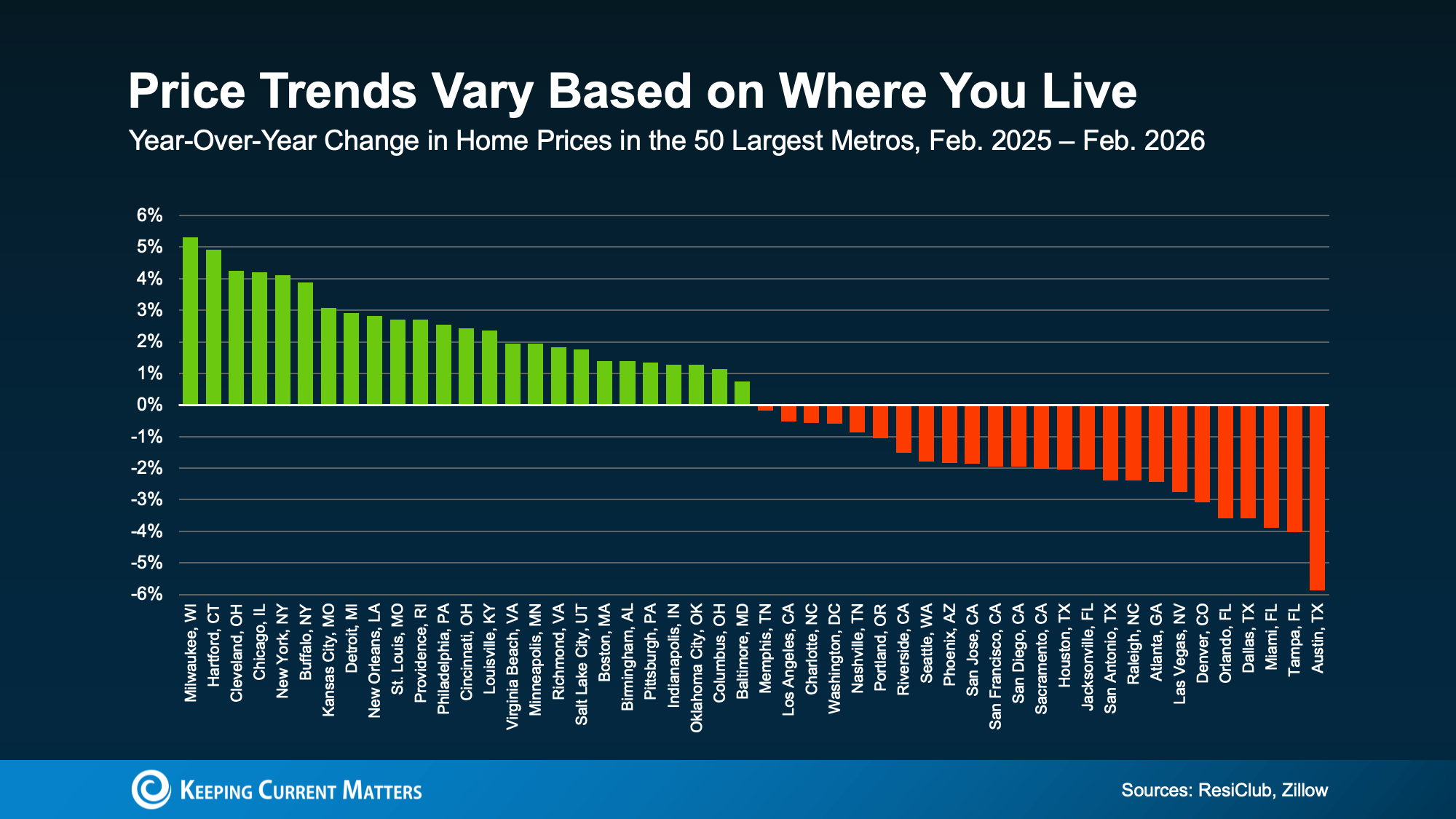
The biggest thing feeding into the confusion online is how different home price trends are by area right now. Take a look at this data from ResiClub and Zillow (see graph below).

About half of the largest metros are seeing prices go up.

The other half are seeing some declines.

a graph of different colored linesUnfortunately, the online chatter only focuses on the markets where prices are down – and that makes it sound like something bigger is happening.

But, as you can see in this graph, that’s only one side of the story. The full picture is different.

The National Perspective: Moderate Price Growth

As a country, when you average it all together to get a true baseline, one thing becomes clear, home prices are still net positive at the national level.

According to the Redfin, national home prices were up about 1% year-over-year in February. So, what we’re seeing right now isn’t a collapse. It’s a market that’s normalizing after a period of unusually fast growth. And that impacts some local markets more than others – particularly those where prices rose too far, too fast during the pandemic. 

A true crash, like what happened in 2008, would mean prices dropping sharply across the entire country. That’s just not what the data shows today. And it’s not where things are going either.

Experts Agree This Isn’t 2008

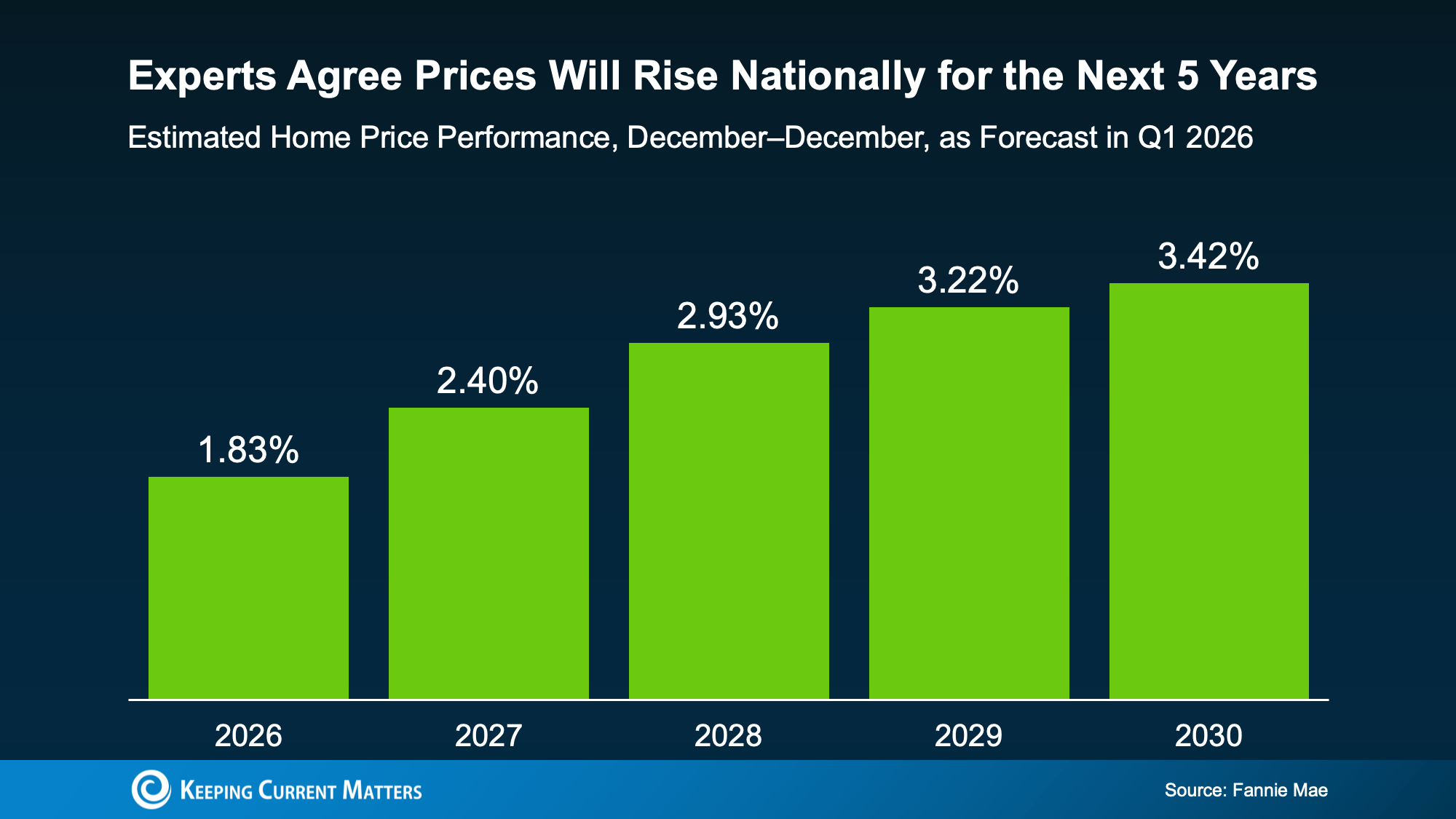
In fact, Fannie Mae surveyed over 100 housing market experts to ask their opinions on where prices are headed from here. And the experts agree, nationally, prices are expected to keep rising over the next five years: 

a graph of green rectangular bars with numbersThat rise will be moderate, particularly this year, but the trend is clear. Nationally, prices are forecast to grow every year now through at least 2030 – and that’s normal. Daryl Fairweather, Chief Economist, at Redfin explains:

“House prices aren’t going to fall on a national scale any time soon—and that’s actually a good thing. It’s normal for house prices to rise gradually over time . . .”

That’s why even in the select areas where prices have dropped slightly this year, the decline is expected to be temporary. According to that same quarterly Fannie Mae survey mentioned above, 85% of the experts say the markets that are seeing mild declines right now will return to positive price growth before the end of 2027.

The main takeaway? This isn’t a crash. And prices aren’t expected to fall nationally. If anything, the few areas experiencing declines are expected to rebound in the next year or so.


Are home prices dropping in Oregon and Arizona?

Not necessarily. Prices vary by city and neighborhood, and many areas remain stable or continue to see growth.


Why do national headlines feel different from local reality?

Because housing markets are local. What’s happening nationwide may not reflect what’s happening in Oregon or Arizona.


Is now a good time to buy despite the headlines?

For many buyers, yes - especially with shifting inventory and more negotiation opportunities.


How can I get accurate home price data locally?

Working with a local agent gives you real-time insights specific to your area.

Bottom Line

It’s easy to get caught up in headlines that make it sound like something big is about to happen. But don’t be fooled. The housing market isn’t crashing. It’s just shifting.

The key is understanding what’s actually happening in your market, so you can make the right move for you. Connect with a real estate agent if you want the local perspective.

Across Oregon and Arizona, pricing trends can vary widely depending on location, demand, and inventory levels. If you want a clear, accurate picture of what homes are really worth in your area, Rockwell Group can provide real-time insights and help you make informed decisions with confidence.

April 19, 2026

Should You Rent or Sell Your Home in Oregon or Arizona?

Should You Rent or Sell Your Home in Oregon or Arizona?


Your House Hasn’t Sold Yet. Should You Rent It Out Instead?

When your house sits on the market longer than expected, it can get frustrating fast.

You start asking: what now? And for a growing number of homeowners, that turns into: should I just rent it instead?

While it sounds like a simple backup plan, becoming “accidental landlord” is actually a much bigger decision than most people realize. That’s when someone planned to sell, didn’t get the price or traction they hoped for, and decided to rent the house out instead.

And lately, that’s happening more often.

Why the Number of Accidental Landlords Is Rising

If you’re faced with the same choice to rent or to sell, here’s what you need to know. First, you’re not alone. And that should actually be some comfort.

According to Zillow about 2.3% of homes available for rent were previously listed for sale. That may not sound like a lot, but it’s actually the highest share in almost 6 years.

Before you go that route yourself, it’s worth slowing down and looking at the full picture. Ask yourself these 3 questions first.

1. Would Your House Actually Work as a Rental?

What’s right for your situation is going to depend on your location, your home’s condition, and what the rental market looks like in your area. Think about:

  • If you’re moving away, do you have a plan for how you’ll handle ongoing maintenance and repairs from afar?
  • Does your house need repairs before it’s rental-ready? And do you have the time, energy, and the funds for that?
  • What’s the market like in your area? Are there a lot of rental vacancies?
  • What monthly rent could you realistically expect?

As C&C Property Management explains:

“At the heart of any rental market is the balance between supply and demand. When more tenants are looking for housing than there are available units, rental prices rise. On the other hand, if new construction adds hundreds of apartments or homes to a neighborhood, prices can soften as tenants have more choices.”

If your home would struggle to stand out or command the rent you need, that’s something to take seriously. Just because you can rent it doesn’t mean it’s the best option for you.

2. Are You Ready To Be a Landlord?

This is the part people don’t always think about upfront. On paper, renting sounds like easy passive income. But in reality, it’s a hands-on responsibility. Imagine:

  • Taking midnight calls about clogged toilets or broken air conditioners
  • Chasing down missed rent payments
  • Covering unexpected repairs
  • Fixing damage between tenants

And those costs can hit when you least expect them.

3. Have You Run the Real Numbers?

There’s also the financial side of things. For starters, renting out your house comes with extra expenses. Here are a few of the biggest according to Bankrate:

  • Higher insurance premiums (landlord insurance typically costs about 25% more)
  • Management fees (if you use a property manager, they typically charge around 10% of the rent)
  • Routine maintenance and services
  • Advertising fees to find tenants
  • Gaps between tenants, where you cover the mortgage without rental income coming in

For some people, that’s totally manageable. For others, it’s more than they want to take on.

Your Next Step: A Conversation with Your Agent

Before you make any decision, talk to your current agent about overhauling your sales strategy first. Sometimes it’s not that buyers aren’t out there. It’s that something about the pricing, presentation, or marketing isn’t quite lining up with what they’re looking for.

And a few small adjustments can make a big difference.

Because while renting can be a great choice for the right person with the right house, if you’re only considering it because your listing didn’t get traction, there may be a better solution.


Should I rent out my home if it doesn’t sell?

It can be a smart option depending on rental demand, your financial situation, and your long-term goals.


Is there rental demand in Oregon and Arizona?

Yes. Markets like Medford and Grants Pass in Oregon, along with cities across Arizona, like Scottsdale often see steady demand, especially in growing or seasonal areas.


What are the risks of renting out my home?

Ongoing maintenance, tenant management, vacancy periods, and local rental regulations are all important to consider.


Should I relist or rent my home instead?

That depends on pricing, current market conditions, and your timeline. A local strategy is key.

Bottom Line

If your home hasn’t sold, you still have options. Renting it out could create income while you wait for better market conditions, or the right buyer to come along.

In both Oregon and Arizona, rental demand can vary by location, season, and price point. If you're torn between selling and renting, make sure to carefully weigh the pros and cons first. For some homeowners, the hassle (and the expense) of renting may not be worth it.

That’s why it’s important to look at the numbers before making a decision. The team at Rockwell Group can help you evaluate your property, understand local demand, and decide whether renting, relisting, or adjusting your strategy is the best move.

Posted in For Sellers
April 19, 2026

Rent vs Buy in Oregon and Arizona: What Makes the Most Sense?

Rent vs Buy in Oregon and Arizona: What Makes the Most Sense?

Rent or Buy? The Real Tradeoff Most People Don’t Talk About

You’ve probably asked yourself lately: Is it even worth trying to buy a home right now? It’s a question a lot of people are asking.

With today’s home prices and mortgage rates, renting can feel like the easier path. In some cases, it might even seem like the only realistic option right now. And if that’s where you are, there’s nothing wrong with that.

But if you’re weighing the decision, there’s one part of the conversation that doesn’t get talked about enough.

It’s what each choice does for your future.

What Renting Really Gets You (And What It Doesn’t)

Depending on your situation, renting does have some advantages:

  • Lower upfront costs.
  • Less responsibility.
  • More flexibility to move when you want.

But even with those benefits, a Bank of America survey found 70% of aspiring homeowners worry about what long-term renting means for their future. And that concern comes down to one thing: you’re not building anything for your future. As Yahoo Finance explains:

“Paying rent doesn’t build equity. You get a place to live, but no ownership stake, no price appreciation, and no asset to leverage for future borrowing or investment.”

So, while renting may feel easier, the flexibility you get comes at a cost.

How Homeownership Builds Your Wealth Over Time

On the other hand, owning a home is one of the most consistent ways people build wealth over time. Why? When you’re a homeowner, you gain something called equity. That’s the difference between what your home is worth and what you owe.

That equity grows with every monthly payment you make. It also gets a boost as home values go up through the years – and it adds up quicker than you may think.

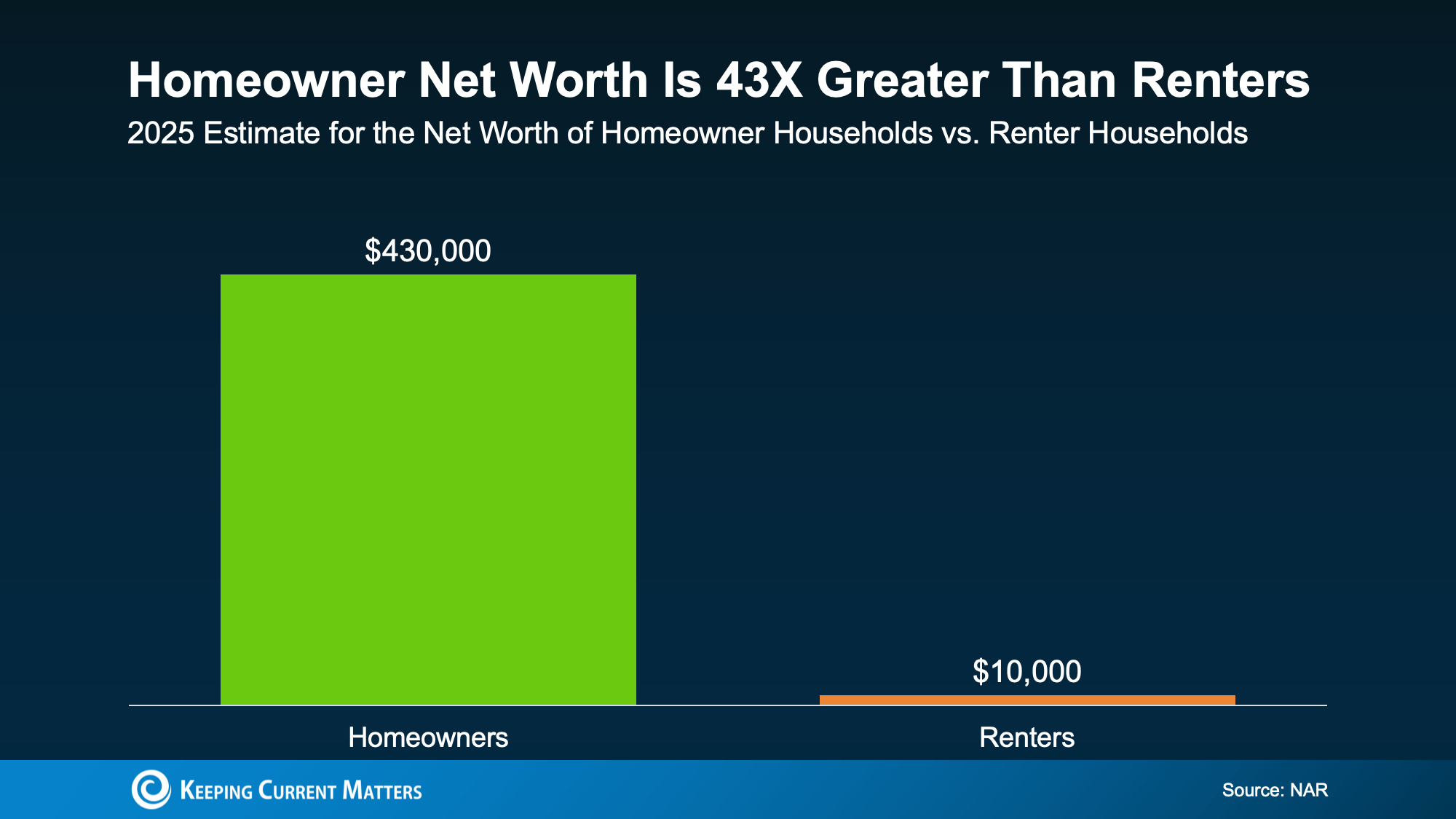
Today, the National Association of Realtors (NAR) says the average homeowner’s net worth is 43X greater than that of a renter:

a graph of a number of peopleThe dollars in the visual don’t lie. On average, here’s how net worth compares:

  • Homeowners: $430k
  • Renters: $10k

And it’s not because homeowners make wildly different decisions day to day. It’s because over time, one path builds something, and the other doesn’t.

So sure, buying comes with some upfront costs and more responsibility. But it’s basically a savings account you can live in.

The Gap Is Growing Over Time

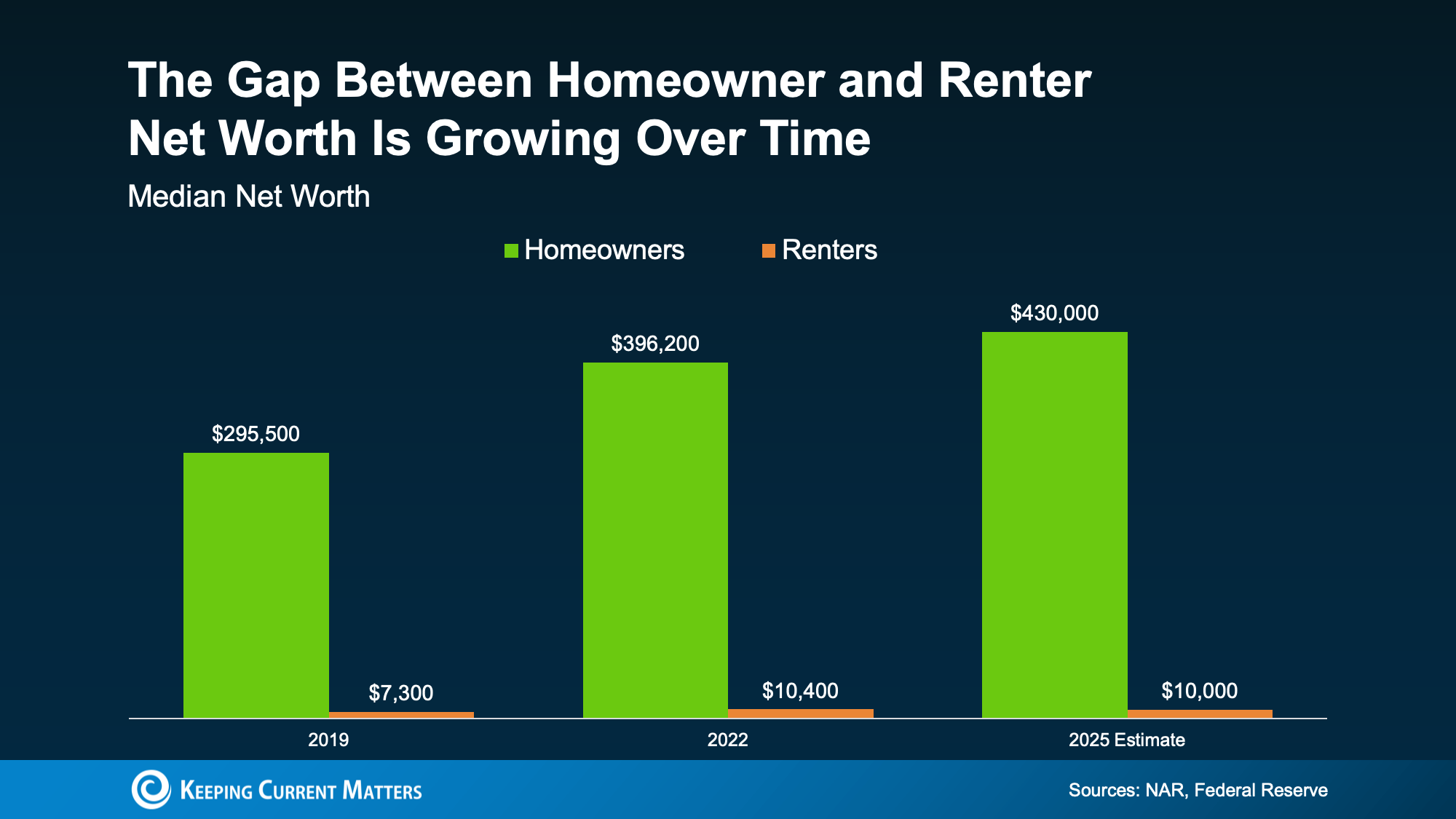
And here’s something else interesting. That net worth gap between renters and homeowners has been widening over time, not shrinking.

If you look back at the reports on net worth through the years, you can see the gap is growing as homeowners gain wealth and renters stay stuck in the rental trap (see graph below):

a graph of green and blue barsEven in 2025, when home prices were moderating, homeowners still gained even more ground. And that tells you something important:

When you can afford it and you’re ready for the responsibility, history shows buying is usually worth it in the long run. Because either way, you’re paying for someone’s mortgage and building someone’s net worth.

When you rent, it’s your landlord’s mortgage – not yours. But when you buy? Your monthly payments help build equity.

The question is: whose do you want to pay? Yours or theirs?

So, Should You Buy a Home Now?

The short answer is, it depends on your situation.

While the long-term benefits of buying are clear, that doesn’t mean the timing is right for everyone right now. And that’s okay. You should only buy a home once you’re ready and the numbers work for you.

But whether you’re looking to buy now or planning for the future, the first step is the same. You should have a quick conversation with a local real estate agent about your goals, timeline, and budget.

They can help you run the numbers and see what’s realistic. You may find buying is closer than you thought. And if not, you’ll at least know exactly what it will take to get there.

Because the sooner you have a plan, the sooner you can decide when it makes sense, instead of wondering if it ever will.


Is it better to rent or buy in Oregon and Arizona right now?

It depends on your goals, but owning builds equity over time while rent payments don’t.


Are home prices still rising in Oregon and Arizona?

Prices can vary by area, but long-term trends show steady growth in many local markets.


What are the benefits of buying vs renting?

Buying offers stability, potential appreciation, and control over your home.


How do I know if I’m ready to buy?

If you have stable income, some savings, and plan to stay in the area, it may be worth exploring.


Bottom Line

Renting may feel more do-able today. But over time, it could cost you.

Deciding whether to rent or buy isn’t just about monthly payments, it’s about your long-term goals and lifestyle. In Oregon and Arizona, many buyers are choosing to invest in homeownership to build equity and create stability.

If you’re weighing your options, Rockwell Group can help you compare real numbers, explore available homes, and make a confident decision based on your situation, not just headlines.

If you want to ditch renting and start building something for your future, it starts with a simple conversation. Connect with a local Rockwell Group real estate agent to talk about your specific goals, and explore your options – so you’re ready when the time is right for you.

April 19, 2026

How to Use Your Tax Refund to Buy a Home in Oregon and Arizona

How to Use Your Tax Refund to Buy a Home in Oregon and Arizona


Getting a Tax Refund? Here’s How It Can Help You Buy a Home

If you’re getting a tax refund this year, here’s something worth thinking about. That money could actually help you get closer to buying a home.

It may not be something you’ve factored into your plan yet, but it can give your savings a nice boost right when you need it most. And whether your refund is a few thousand dollars or more, there are some smart ways to put that money to work as you get ready to buy.

Your Refund May Be Even Bigger This Year

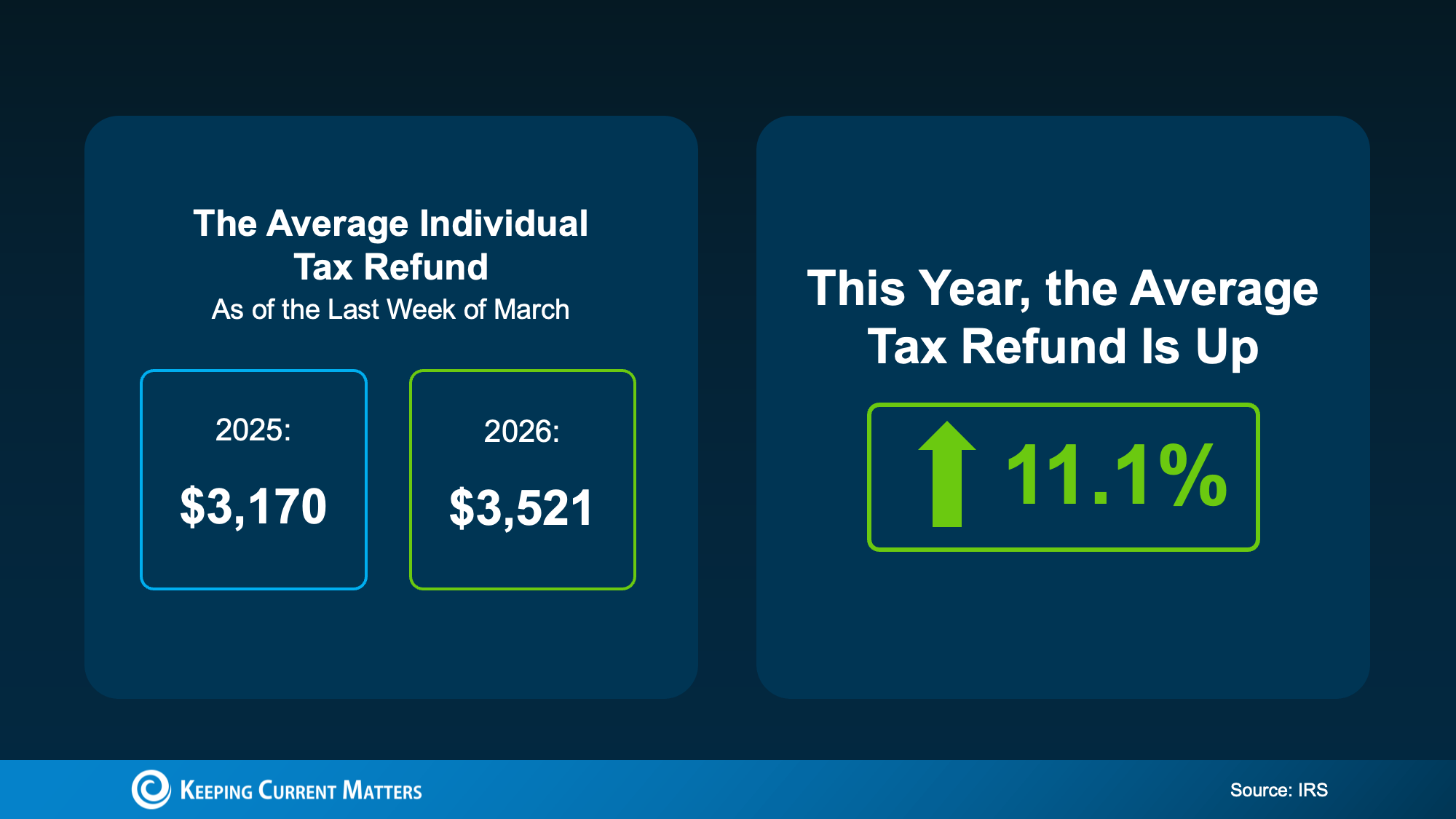
Let’s start with the good news. People are getting even more money back in their refunds than they did last year. The visual below uses data from the Internal Revenue Service (IRS) to show the average individual’s refund is 11.1% higher this year:

a screenshot of a computerOf course, your exact refund will vary. But any extra money you get is a good thing, especially when affordability is still tight. 

How You Can Use Your Tax Refund

So, how can you put that money to work? Here are a few smart ways to use your refund when buying a home, according to Freddie Mac:

  • Put it toward your down payment. Data shows saving for a down payment is one of the biggest hurdles for first-time homebuyers. Using your refund can help you build that up faster. And the good news? You may not need to put as much down as you think.

  • Use it for your closing costs. Closing costs usually range from about 2% to 5% of the home’s purchase price. Using your refund here can make things feel a lot more manageable on closing day.

  • Lower your mortgage rate. You may have the option to buy down your mortgage rate. That means paying a little more upfront to get a lower monthly payment. If you’re looking for ways to make the numbers work a little better, this is something that could be worth asking about.

You Don’t Have To Figure This Out Alone

If you have a tax refund coming, it’s a great time to take another look at your homebuying savings. Maybe you’re almost at your goal and you can buy sooner than you expected.

A trusted real estate agent and lender can help you map out what you need, what your options are, and how to make the most of what you already have, including your tax refund.


Can I use my tax refund to buy a home?

Yes. Many buyers in Oregon and Arizona use their refund for a down payment, closing costs, or to reduce their mortgage rate.


How much do I need to buy a home in Oregon and Arizona?

It varies, but many loan programs allow as little as 3–5% down, and some offer assistance programs.


Is spring a good time to buy a home?

Yes. Spring typically brings more inventory, giving buyers more options across Medford, Grants Pass, the rest of Oregon, and Arizona.


What’s the first step after getting a tax refund?

Talk to a local lender and real estate agent to understand your buying power and options.


Bottom Line

If buying a home is on your radar this year, don’t overlook your tax refund. It could be the extra push that helps you go from almost there to actually ready.

If you’re in Oregon or Arizona and thinking about putting your tax refund to work, this could be your moment to step into homeownership. Whether you’re exploring homes in Medford, Grants Pass, or Arizona cities like Scottsdale, having the right strategy makes all the difference.


Want to see how far your savings could take you right now? Talk with any local Rockwell Group real estate agent in Southern Oregon and build a plan that fits your situation.


The team at Rockwell Group can help you map out your next move, connect you with trusted lenders, and guide you through every step, from budgeting to closing day.

April 3, 2026

April 2026 Events in Scottsdale, Arizona

🌵 April 2026 Events in Scottsdale, Arizona

April in Scottsdale is peak season. Perfect weather, packed event calendars, and a mix of luxury, nightlife, culture, and outdoor experiences you won’t find anywhere else.

Whether you're visiting, living here, or thinking about making a move, this is your complete guide to everything happening in Scottsdale this April.


🎉 FESTIVALS & LARGE-SCALE EVENTS

Arizona Bike Week

📅 April 8–12, 2026
📍 Scottsdale
👉 http://www.azbikeweek.com/
Massive 5-day festival featuring concerts, stunt shows, vendors, and nightlife energy.


Phoenix Film Festival

📅 April 9–19, 2026
📍 Scottsdale
250+ films, parties, workshops, and one of Arizona’s biggest cultural events.


Yrēfy Scottsdale Jazz Festival

📅 April 11, 2026
📍 Scottsdale
👉 https://www.eventbrite.com/e/yrefy-jazz-festival-15th-international-jazz-day-anniversary-tickets-1982122927032?aff=oddtdtcreator
Luxury resort jazz experience celebrating International Jazz Day.


Celebrate Latin Jazz

📅 April 11–12, 2026
📍 Phoenix
👉 https://mim.org/events/celebrate-latin-jazz/2026-04-11/
Live performances, lectures, and dance workshops.


🎨 ART, CULTURE & EXPERIENCES

Celebrate Spring Gold Palette ArtWalk

📅 April 9, 2026
📍 Scottsdale
👉 https://scottsdalegalleries.com/
30+ galleries, live music, and seasonal exhibits.


Ghost Towns and Gardens Exhibit

📅 April 9, 2026
📍 Scottsdale
👉 https://themarshallgallery.com/news--events
Artist meet-and-greet featuring desert landscapes and vibrant artwork.


Nancy Kravetz Exhibition Opening

📅 April 15, 2026
📍 Scottsdale
👉 https://scottsdalearts.org/our-story/news-press/posts/2026-nr-nancy-kravetz/
A major abstract art exhibition with a public reception.


Cycle the Arts (20th Anniversary)

📅 April 19, 2026
📍 Scottsdale
👉 https://scottsdalearts.org/whats-on/events/cycle-the-arts-20th-anniversary/
Free guided bike tour through Scottsdale’s public art.


🎶 CONCERTS & LIVE SHOWS

The Wailers

📅 April 9, 2026
📍 Scottsdale
👉 https://www.talkingstickresort.com/entertainment-acts/the-wailers/
Celebrating 50 years of reggae.


Samara Joy

📅 April 9, 2026
📍 Scottsdale
👉 https://azmusicfest.org/events/samara-joy/
Grammy-winning jazz vocalist live.


Conjunto Poder

📅 April 9, 2026
📍 Scottsdale
👉 https://www.casinoarizona.com/entertainment/the-showroom/conjunto-poder/
Live Norteño music performance.


The British Invasion Years

📅 April 11, 2026
📍 Scottsdale
👉 https://azmusicfest.org/events/the-british-invasion-years/
Beatles, Rolling Stones, and 60s classics tribute.


Drew & Ellie Holcomb Tour

📅 April 19, 2026
📍 Scottsdale
👉 https://scottsdalearts.org/whats-on/events/drew-and-ellie-holcomb-the-memory-bank-tour/
Americana-style live performance.


🍷 FOOD, WINE & DINING EXPERIENCES

Night in Naples

📅 April 9, 2026
📍 Scottsdale
👉 https://jwcamelback.ipoolside.com/?servicename=NightinNaples&source=share
Italian dining experience under the stars.


Voyage Through the Vineyards

📅 April 10, 2026
📍 Paradise Valley
👉 https://www.sanctuaryaz.com/happenings/voyage-through-vineyards-0
Guided wine tasting experience.


Saturday Wine Dinner

📅 April 11, 2026
📍 Scottsdale
👉 https://www.ccacademy.edu/calendar/saturday-wine-dinner-04-11-26/
Four-course meal with wine pairings.


Winemaker Dinner (FnB Restaurant)

📅 April 14, 2026
📍 Scottsdale
👉 https://www.exploretock.com/fnbrestaurant/event/603332/tadeo-borchardt-of-neyers-vineyards
Exclusive multi-course dining with wine expert.


Spanish Sunset Experience

📅 April 23, 2026
📍 Scottsdale
👉 https://jwcamelback.ipoolside.com/?servicename=Spanish%20Sunset%20Experience&source=share
Luxury outdoor Spanish-themed dining event.


🧘 WELLNESS & MINDFUL EXPERIENCES

Sacred Mantras & Sound Healing

📅 April 10, 2026
📍 Scottsdale
👉 https://www.shantisoundaz.com/sacred-mantras-and-sound-healing-with-lama-tashi-norbu/


Detox in the Desert

📅 April 12, 2026
📍 Paradise Valley
👉 https://mountainshadows.com/event/detox-in-the-desert/


Moonlight Floating Meditation

📅 April 14, 2026
📍 Paradise Valley
👉 https://www.sanctuaryaz.com/happenings/solrise-series-moonlight-floating-sound-meditation


🎭 ENTERTAINMENT, SPORTS & FUN EVENTS

Masters Viewing Party

📅 April 11, 2026
📍 Scottsdale
👉 https://www.goldwaterbrewing.com/scottsdale-happenings


Magic Show (Carnival of Illusion)

📅 April 11, 2026
📍 Phoenix
👉 https://www.carnivalofillusion.com/


Tents by the Tracks

📅 April 11–12, 2026
📍 Scottsdale
👉 https://www.therailroadpark.com/?post_type=event&p=3124


Court Connect

📅 April 23, 2026
📍 Paradise Valley
👉 https://www.sanctuaryaz.com/happenings/court-connect


Court Connect (Sports + Social Event)

📅 April 23, 2026
📍 Paradise Valley
(Already included above — same event, high engagement social experience)


🎬 THEATER & EXTENDED EXPERIENCES

THE NOTEBOOK (Live Musical)

📅 April 7–12, 2026
📍 Tempe
👉 https://asugammage.com/thenotebook


Arizona Tiki Oasis

📅 April 16–19, 2026
📍 Scottsdale
👉 https://www.aztikioasis.com/


ARTrageous Gala 2026

📅 April 11, 2026
📍 Scottsdale
👉 https://scottsdalearts.org/whats-on/events/the-artrageous-gala-2026/


Lotería Nights

📅 April 9, 2026
📍 Phoenix
👉 https://ticketing.dbg.org/events/69ed6d5d-55a7-db8d-e0aa-df0d3e4f63f4


Passport to Spain

📅 April 11, 2026
📍 Paradise Valley
👉 https://www.omnihotels.com/hotels/scottsdale-montelucia/things-to-do/passport-to-spain


Charity Golf Tournament

📅 April 11, 2026
📍 Phoenix
👉 https://birdease.com/10thannualcharitygolf


Court Connect

📅 April 23, 2026
📍 Paradise Valley
👉 https://www.sanctuaryaz.com/happenings/court-connect


🏡 THINKING ABOUT LIVING IN SCOTTSDALE?

Scottsdale offers more than events — it’s a lifestyle of sunshine, luxury, and energy year-round.

👉 https://rockwellrealestate.com/
👉 https://www.rockwellrealestate.com/search/advanced_search/
👉 https://rockwellrealestate.com/home-valuation/


❓ FAQs (AEO OPTIMIZED)

What are the biggest events in Scottsdale in April?

Arizona Bike Week, Phoenix Film Festival, and the Scottsdale Jazz Festival lead the month.

Are there free events in Scottsdale?

Yes — ArtWalk, Masters Viewing Party, and several community experiences are free.

What makes April special in Scottsdale?

Perfect weather, peak tourism, and the most active event calendar of the year.

Are there luxury experiences available?

Yes — wine dinners, spa events, resort experiences, and curated culinary events.

Is Scottsdale good for nightlife in April?

Yes — concerts, festivals, and resort events create a strong nightlife scene.


⚠️ DISCLAIMER

Event details may change. Please check official links for the most up-to-date information.

Posted in Arizona Events